There's really nothing like it.
Admittedly, it's a lot of hard work, and kneeling or sitting on mulch-covered--and this morning, still wet after last night's rain--ground isn't my favorite thing in the world. Being mildly allergic to the fruits you are harvesting removes some of the pleasure. But there's really nothing like the pleasure that comes from harvesting a garden.
It's a pleasure that increases as you grow older. Harvesting was not high on my list of Things I Like when I was younger. It was hot, I didn't like having to sit on the mulch, and you never knew when you were going to be contending with a squadron of bugs for the same plant. (The one year I can recall harvesting peaches, for example, became a nightmare when we started competing with every variety of wasp in Randall County, if not the bloomin' Texas Panhandle. Yeep!) Nor was I crazy about the workload of canning that followed.
That has changed since I moved out and had to buy my own food. It has changed even more since I noticed the ridiculous increase in price connected with fresh fruits and vegetables.
Now there is pride. There is contentment. We have food, even if it does have an unpleasant effect on my lower intestines. We have food we did not have to pay for. Even better, we have food we were not entirely sure was going to show up at all, considering how badly the tomatoes appeared to be doing earlier in the year. It is food we grew. I felt much the same when I went out to harvest our only crop of green beans a few months ago. However little it was--and we had a puling green bean harvest--it was ours.
Now, it is possible to have too much of a good thing, but I don't think that will be the case this year, considering how small most of our harvests were. Still, we've frozen enough pumpkin to have pies and muffins probably up to next year's ripening, the okra and peppers were enthusiastic enough for us to bring a box of fresh produce to be given away at every Mass for nearly two months, and the corn, after a sad, slow start, received a rainstorm just in time for it to explode into growth and production. I was not here for that harvest, but the other girls bragged about how much corn they shucked, and I suspect that the frozen corn will last us a good long while.
And whether you are putting up corn, or pumpkin, or ensuring a supply of hot sauce for the next several months...you are making your own food. And that is a Good Thing.
Wednesday, September 18, 2013

Saturday, September 14, 2013
Book Review: Chalice

And while he is willing to return and tend his damaged land, the Priests of Fire themselves are not so sure he can live among ordinary humans anymore.
This is an extremely poignant story, told entirely from Mirasol's point of view. And while you never actually enter her mind, there is no doubt in the reader's mind what she is thinking, feeling, or wishing at any given moment. And you follow in her footsteps: relieved when an invocation goes right, overwhelmed by the enormity of a task for which she has not been prepared, grimly determined to support her unusual Master in the face of any odds, or relaxing at home in the presence of her bees and enjoying her honey.
And the bees are all through the story: swarming a few hundred times when the task of the Chalice comes to her in the beginning, cheerfully clustering about her in the evenings and mornings when she is home, and coming in a rousing force at the climax--all in a manner that may well insure you never look at bees quite the same way again. I know I haven't. I'm certainly not afraid of ordinary honey bees anymore.
Just as important as the bees is their honey. Mirasol's vessel of her Chalicehood is honey, something entirely unique in the history of the demesnes, and the honey her bees produce becomes unusually potent, and filled with special properties. And while you understand that some of the things her honey is good for is made up, the reality is that honey is actually healing, good for putting on wounds and burns. And if you are like me, make sure you have honey in the house when you sit down to read this, because I craved it when I finished the story!
This is not a book to just flip through casually. The plot is well-woven and intricate, and while individual scenes may be enjoyed on their own--after you've finished the book the first time--trying to read them separately beforehand is confusing. Nor is it a book to read on a day where you may be constantly interrupted, because if you're like me, you won't want to put it down and interruptions will be irritating.
For those who like stories to go from point A to point B without any stops: this is not the book for you. The story rambles along its way, occasionally telling events after the fact, or going back and looking at them before continuing on. But even with the rambles, the story never loses track of its end, or even of its current scene. To me, this actually makes it read more authentically. Who among us, when we are telling a story to someone, manages to stay completely on track and not stray here and there on a relevant tangent? I sure know I can't, not when I'm talking.
The 'earthlines' that run through the land and can be heard by those with a strong tie to the demesne had me bothered at first. It seemed somewhat New Age-y, which I tend to be wary around. But the theme of the book is not environmentalism, which usually goes with New Age trappings: it's stewardship, a Catholic ideal, and something I support wholeheartedly. I thought about it for a while, and realized that the idea of the earthlines--mankind being able to hear what needed doing to properly keep the earth--is possibly in keeping with an idea of an unfallen world. Now, the world of Willowlands and the other demesnes is hardly unfallen, easily seen in the actions of some of the people, but the concept is the same.
In a relatively unusual twist for a Robin McKinley story, Chalice does not involve any scenes that could be truly described as battle scenes. It is a fairly calm, even gentle story--which does not mean there is no suspense, nor that the fate of a land does not rest on the outcome. But it is the rituals of the Chalice, the unity of a land, and yes, the presence of the bees and a special honey that are the deciding factor, not skill with a sword or even the heroine's stubbornness. Though, to be fair, Mirasol has more than her share of stubbornness!
All the characters in Chalice read as actual people, even when you don't learn much about them. Mirasol and the Master are some of the most empathetic characters I've come across, in their struggles to come out of their previous places and fill the tasks their land needs them to fill: Mirasol from her place as a beekeeper and a woodsman, and the Master from his Fire. I love the numerous times Mirasol breaks a political game by refusing to play it, and her dismay when asked to state a blunt statement subtly. And the Master perfectly mixes all the qualities I like in a hero: he is vulnerable, good, needs the aid of the heroine--yet, oh my word, there is no denying how dangerous he is! The crotchety Grand Seneschal proves to be a straightforward man, struggling to stay afloat in a dangerous political sea, and also trying to keep the land together after the spectacularly bad previous Master all but ran it into the ground. Even the minor villain--so obviously a tool for the scheming and truly vicious Overlord--is less despicable than he is pathetic.
In closing: though I can't make a sweeping recommendation for all of Robin McKinley's stories, I heartily endorse this one. Just don't forget the honey for afterwards.
Wednesday, September 11, 2013
I'm Back!
I have returned from house-sitting and from Washington! With any luck, things will get back to normal on here in a few days. There will probably be scads of pictures to post as to what went on up in Washington, too--if I can get them from my camera-happy sister.
Monday, August 12, 2013
Heads Up
Just to let you know that I may not be able to post at all for a few weeks. I will be in a place with little to no access to computers, and most likely no available Internet. And yes, it will be for at least three weeks. I may try to hijack a cousin's computer in September, but no promises. So, to tide you over, here is something I've discovered recently, which is not only insanely beautiful, but also ties into my great love of the Elder Scrolls games. Enjoy!
Wednesday, August 7, 2013
Belated Time-Write Tuesday
Apologies for missing last week's post; I was not up to just about anything that week. And this post is late because I spent last night and most of the day with my sister-in-law. My brother has a nice computer...with a weird keyboard. I don't even try to type anything extensive on it. I am making up for it this week, with two sets. Have fun!
Male Lead: Ithast: This elf has a terrible destiny, and needs someone to share that burden. His peach-colored hair seems to defy gravity. His mysterious eyes are crimson.
Female Lead: Izlilos: Often Kidnapped Princess has Hourglass build Pale Yellow skin Dark Brown hair Slitted Copper eyes enjoys Functional Clothing Plain coronets
Villain: Tarot Ambermage: This biased magic-user is driven by vengeance. She uses enchantment in her plots, usually engaging in blackmail of business leaders to achieve her goals. She has annoyed the gods.
Setting: Woods of Crystal
McGuffin: Animated Crown
Male Lead: Ushiwa: This samurai is a paragon of virtue. His coffee-colored hair is always wind-blown. His penetrating eyes are sky-blue. He has a charming accent. His comfortable outfits show off his slender build.
Female Lead: Mystery Flora: This spiritual magical girl has deep-set orange eyes and very short, straight, silky, coffee-colored hair worn in a practical style. She has a thin build. She has luck powers that are invoked instinctively. Her uniform is purple and white in even proportions, and it strongly resembles a gypsy dress.
Villain: The Terrifying Whisperer: This secretive mad scientist is motivated by hatred. She uses physics in her plots, commonly using teleportation gadgets to achieve her goals. She is from a bad family.
Setting: Warped City
McGuffin: Guardian-Engine
1: Setting: modern-day sword-and-sorcery. Theme:natural disaster story
2:Setting: high fantasy/space opera. Theme:love-against-the-odds/power fantasy story
3:Setting: science-fiction. Theme:occult/murder mystery story
Let's see what we can do with these!
Male Lead: Ithast: This elf has a terrible destiny, and needs someone to share that burden. His peach-colored hair seems to defy gravity. His mysterious eyes are crimson.
Female Lead: Izlilos: Often Kidnapped Princess has Hourglass build Pale Yellow skin Dark Brown hair Slitted Copper eyes enjoys Functional Clothing Plain coronets
Villain: Tarot Ambermage: This biased magic-user is driven by vengeance. She uses enchantment in her plots, usually engaging in blackmail of business leaders to achieve her goals. She has annoyed the gods.
Setting: Woods of Crystal
McGuffin: Animated Crown
Male Lead: Ushiwa: This samurai is a paragon of virtue. His coffee-colored hair is always wind-blown. His penetrating eyes are sky-blue. He has a charming accent. His comfortable outfits show off his slender build.
Female Lead: Mystery Flora: This spiritual magical girl has deep-set orange eyes and very short, straight, silky, coffee-colored hair worn in a practical style. She has a thin build. She has luck powers that are invoked instinctively. Her uniform is purple and white in even proportions, and it strongly resembles a gypsy dress.
Villain: The Terrifying Whisperer: This secretive mad scientist is motivated by hatred. She uses physics in her plots, commonly using teleportation gadgets to achieve her goals. She is from a bad family.
Setting: Warped City
McGuffin: Guardian-Engine
1: Setting: modern-day sword-and-sorcery. Theme:natural disaster story
2:Setting: high fantasy/space opera. Theme:love-against-the-odds/power fantasy story
3:Setting: science-fiction. Theme:occult/murder mystery story
Let's see what we can do with these!
Monday, August 5, 2013
Musing: Life Lessons from Fairy Tales
Ah, fairy tales. The sweet, happy little world, all hearts and flowers and bunnies, where the Fairest of Them All meets her Prince Charming, they fall in love at first sight, and ride off into the sunset together.
Or wait: maybe you mean the current trend of taking these innocent stories, splattering them with blood and gore and maybe some feministic motifs including no-strings-attached sex, where there is no happy ending and you're just happy if not everybody dies in the end?
No to both, actually: I'm talking about the real stories, not the sappy, sugar-coated things that emerged from the so-called Enlightenment, nor the bastardized drivel often a few eyefuls shy of pornography. I'm talking about the unchanged tales from the Brothers Grimm, Hans Christian Anderson, and the nameless storytellers whose tales have been passed down to us. Though not exactly G-rated--for instance, I wouldn't recommend The Juniper Tree or Fitcher's Bird as bedtime stories for a wee one--they weren't as blood-spattered or gross as some critics would have us believe. And they all have lessons to consider.
The parable nature of the more popular fairy tales--Snow White, Sleeping Beauty, Beauty and the Beast--has been discussed in length by authors wiser than I, so I won't bother with them. In fact, I'm not going to stray near the more known tales at all.
I'm going to discuss three more grisly tales, their current significance, and the lessons people--particularly teenaged girls--can, and maybe should, take from them.
These stories are Fitcher's Bird, The Robber Bridegroom, and Bluebeard. While the trappings and climaxes of each story are different, each one has a similar theme: a beautiful, if slightly naive girl falls for the easy charm of a handsome, smooth-talking man, and goes to his house. In two of the stories, she's given the run of the house with only one room forbidden; in the third, she simply finds someone who knows the true nature of her prospective bridegroom. Each girl discovers in a horrible manner that this charming fellow is a cold-blooded murderer--and in one instance, he's a cannibal. Each one of these stories has a happy ending: Mrs. Bluebeard's brothers arrive to visit at a highly opportune moment and save her life, while the girl in Robber Bridegroom escapes his house unnoticed and conspires with her father to reveal the man's doings and bring him to justice, and the clever girl in Fitcher's Bird tricks her murderous groom and his friends, so that her vengeful relatives arrive in time to lock the whole group in and burn the house down.
Now, I'm fairly certain that the number of young girls who get in a relationship with some smooth-talking charmer only to discover he's a cannibal or has a closet full of the bodies of his previous sweethearts is fairly small. But we all know someone who's fallen for a guy, and then discovered just what a bad bargain he is. We probably know several girls who have done that. And I can't help but wonder if familiarity with the 'Murderous Bridegroom' stories might help prevent that. Read the stories, then take these points to consider.
Point One: Reputations are there for a reason. In Bluebeard, Bluebeard already has a bad reputation, stemming from the fact that no one knows what's happened to his previous wives. Had the young lady thought a little harder about that, she might not have found herself in her bad position. Girls, if your hot new hunk is rumored to be abusive, find out the truth. If he is, you may have saved yourself a lot of pain and anguish.
Point Two: Listen to your instincts. In The Robber Bridegroom, the girl is not the one who picks the guy out; it's actually her father who is fooled by the robber's good looks and suave ways. But the girl senses something very wrong about him--so that when she discovers the truth, she isn't surprised. He may seem like the greatest thing since sliced bread, but if you have a funny feeling about him, do some research. It may save your self-worth, if not your life.
Or wait: maybe you mean the current trend of taking these innocent stories, splattering them with blood and gore and maybe some feministic motifs including no-strings-attached sex, where there is no happy ending and you're just happy if not everybody dies in the end?
No to both, actually: I'm talking about the real stories, not the sappy, sugar-coated things that emerged from the so-called Enlightenment, nor the bastardized drivel often a few eyefuls shy of pornography. I'm talking about the unchanged tales from the Brothers Grimm, Hans Christian Anderson, and the nameless storytellers whose tales have been passed down to us. Though not exactly G-rated--for instance, I wouldn't recommend The Juniper Tree or Fitcher's Bird as bedtime stories for a wee one--they weren't as blood-spattered or gross as some critics would have us believe. And they all have lessons to consider.
The parable nature of the more popular fairy tales--Snow White, Sleeping Beauty, Beauty and the Beast--has been discussed in length by authors wiser than I, so I won't bother with them. In fact, I'm not going to stray near the more known tales at all.
I'm going to discuss three more grisly tales, their current significance, and the lessons people--particularly teenaged girls--can, and maybe should, take from them.
These stories are Fitcher's Bird, The Robber Bridegroom, and Bluebeard. While the trappings and climaxes of each story are different, each one has a similar theme: a beautiful, if slightly naive girl falls for the easy charm of a handsome, smooth-talking man, and goes to his house. In two of the stories, she's given the run of the house with only one room forbidden; in the third, she simply finds someone who knows the true nature of her prospective bridegroom. Each girl discovers in a horrible manner that this charming fellow is a cold-blooded murderer--and in one instance, he's a cannibal. Each one of these stories has a happy ending: Mrs. Bluebeard's brothers arrive to visit at a highly opportune moment and save her life, while the girl in Robber Bridegroom escapes his house unnoticed and conspires with her father to reveal the man's doings and bring him to justice, and the clever girl in Fitcher's Bird tricks her murderous groom and his friends, so that her vengeful relatives arrive in time to lock the whole group in and burn the house down.
Now, I'm fairly certain that the number of young girls who get in a relationship with some smooth-talking charmer only to discover he's a cannibal or has a closet full of the bodies of his previous sweethearts is fairly small. But we all know someone who's fallen for a guy, and then discovered just what a bad bargain he is. We probably know several girls who have done that. And I can't help but wonder if familiarity with the 'Murderous Bridegroom' stories might help prevent that. Read the stories, then take these points to consider.
Point One: Reputations are there for a reason. In Bluebeard, Bluebeard already has a bad reputation, stemming from the fact that no one knows what's happened to his previous wives. Had the young lady thought a little harder about that, she might not have found herself in her bad position. Girls, if your hot new hunk is rumored to be abusive, find out the truth. If he is, you may have saved yourself a lot of pain and anguish.
Point Two: Listen to your instincts. In The Robber Bridegroom, the girl is not the one who picks the guy out; it's actually her father who is fooled by the robber's good looks and suave ways. But the girl senses something very wrong about him--so that when she discovers the truth, she isn't surprised. He may seem like the greatest thing since sliced bread, but if you have a funny feeling about him, do some research. It may save your self-worth, if not your life.
Point Three: Give charity—and accept
chivalry—with care. The sorcerer in Fitcher’s
Bird disguises himself as a beggar to get into the houses of pretty girls.
When they handed him bread, their hands would touch, and they would fall under
his enchantment, willingly going with him to their deaths. Now, you might not
find a sorcerer in disguise…but by giving or accepting kindness from the wrong
guy, you might find yourself in just as bad a situation.
Point Four: It's all yours But. In both Bluebeard and Fitcher's Bird, the young ladies were given the run of the house...with the exception of one room. Once they gave in to curiosity and opened the door, their fates were sealed. Unless you've actually fallen for a serial killer who keeps his gruesome trophies in a forbidden room--unlikely--the 'Sealed Door' is probably going to be the womb. Dare to get pregnant, and these modern-day Bluebeards will either force their girlfriends to get an abortion, beat them into miscarriage, or kill her. If your guy is violently against the idea of kids, he's not going to like it when the birth control fails.
Point Five: Get help. In all the stories, the girl, while able to trick or delay her murderer, does not take him down on her own. Mrs. Bluebeard is rescued by her brothers. The girl in Robber Bridegroom recruits her father and then the rest of the town, while the clever girl in Fitcher's Bird sends her rescued sisters home with orders to come back with reinforcements. They don't try to fight on their own. I would advise that all girls get a small-caliber gun and learn how to use it...but I would also advise that you get strong friends of good repute, who will help you if you need it.
Friday, August 2, 2013
Reader Review: Niahm and the Hermit
Come away, oh mortals; come away from this world of dreary cares and dismal doings. Enter into a rich world of mystery, wonder, and danger, where the pageantry of the court and the stubborn day-to-day living of the common world sit comfortable together, and where the woods hold constant danger and the possibility of breathtaking beauty.
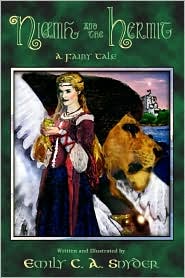 Niahm and the Hermit is a marvelous piece of high fantasy that flows like a deep, slow river toward a satisfying, if tear-jerking, conclusion. The plot never feels hurried, moving on at a steady pace to allow the reader to understand everything going on--and be aware, there is always a lot going on. The world of the Twelve Kingdoms is well-imagined and filled with its own mythologies, often referencing old tales and goings-on that happened well before the story takes place. The settings move from the pageantry of the court to the goings-on at a common inn in the town below the castle, from the eerie depths of the Dark Wood to the merriment of a Faerie's woodland hall, from the rough life on the road to the simple life of a peasant--flowing seamlessly from one setting to the other, and doing it so well it never feels jarring.
The book boasts several villains: the sophisticated Count, whose fall is detailed in the first few chapters until you are not surprised at the depth of his depravity, an ancient evil that roams the mountains, and a bitter, spiteful old witch with ambitions beyond her powers, in addition to numerous monsters roaming the Dark Wood and three demonic shadows serving the Count. And these villains are written so well that, despite the fact that the entire rest of the cast is, if not heroes, at least innocents, they never seem overmatched.
But the heroes are the real reason the book works so well. Despite the poetic, archaic prose they speak and act in, every one of them comes across as a real person, cheerfully shattering the myth that truly good people are boring to read about. The heroine, in particular--a princess who is so beautiful she blinds almost anyone who sees her without her veil, and is as good as she is beautiful--never comes across as cloying, silly, dull, or without humor. Even more impressively, her devoted, feisty cousin Elowen never reads as bitchy--though her role as uninterested heartbreaker of the court could easily degenerate into that. And the hero, Gethin, the mysterious Hermit, is completely believable as he seeks out his beloved, whom he knows only through a few letters and one conversation in the moonlight.
The book is not for everyone. Just for starters, the prose is rich, generously embellished with verbal equivalents of purple, lapis lazuli, and gold leaf. The language is also archaic, the characters addressing each other as 'Thee' and 'Thou' except in informal circumstances, and the descriptive scenes can take up to half a page to read. Admittedly, that's one of my favorite things about the book: I really like gorgeous description and lush prose.
The story has a tone of high morals without being preachy. Actions have consequences, and if your actions aren't the best, then you might find the consequences unpleasant--which is all it really has to say on the subject, aside from a mild sorrow indicated when certain characters fall. In one instance, the Count uses crude language--which is in keeping with the scene, where he is trying to drive his guard into madness--and there are a few mentions of premarital sex, all of which are mentioned so lightly, or so subtly, that a preteen probably wouldn't pick them up at all. (Three captives in the camp of the Wolf King are said to have been trysting when they were caught, and a sassy old lady telling a story makes a reference to a girl who would "give her all, and have worse for her pains in nine month's time.")
There are dozens of characters, all of whom have Welsh or Gaelic-styled names, and this makes the glossary and pronunciation guide in the back of the book vital. The good thing is, even the appendices are are so well-written that you don't mind going through them to look up different characters or backstories. In fact, I look forward to paging through and reading the legends of the Twelve Kingdoms.
So if you like deep stories where there's always another thing to discover, rich language, and vibrant characters, I would heartily recommend this book.
The book boasts several villains: the sophisticated Count, whose fall is detailed in the first few chapters until you are not surprised at the depth of his depravity, an ancient evil that roams the mountains, and a bitter, spiteful old witch with ambitions beyond her powers, in addition to numerous monsters roaming the Dark Wood and three demonic shadows serving the Count. And these villains are written so well that, despite the fact that the entire rest of the cast is, if not heroes, at least innocents, they never seem overmatched.
But the heroes are the real reason the book works so well. Despite the poetic, archaic prose they speak and act in, every one of them comes across as a real person, cheerfully shattering the myth that truly good people are boring to read about. The heroine, in particular--a princess who is so beautiful she blinds almost anyone who sees her without her veil, and is as good as she is beautiful--never comes across as cloying, silly, dull, or without humor. Even more impressively, her devoted, feisty cousin Elowen never reads as bitchy--though her role as uninterested heartbreaker of the court could easily degenerate into that. And the hero, Gethin, the mysterious Hermit, is completely believable as he seeks out his beloved, whom he knows only through a few letters and one conversation in the moonlight.
The book is not for everyone. Just for starters, the prose is rich, generously embellished with verbal equivalents of purple, lapis lazuli, and gold leaf. The language is also archaic, the characters addressing each other as 'Thee' and 'Thou' except in informal circumstances, and the descriptive scenes can take up to half a page to read. Admittedly, that's one of my favorite things about the book: I really like gorgeous description and lush prose.
The story has a tone of high morals without being preachy. Actions have consequences, and if your actions aren't the best, then you might find the consequences unpleasant--which is all it really has to say on the subject, aside from a mild sorrow indicated when certain characters fall. In one instance, the Count uses crude language--which is in keeping with the scene, where he is trying to drive his guard into madness--and there are a few mentions of premarital sex, all of which are mentioned so lightly, or so subtly, that a preteen probably wouldn't pick them up at all. (Three captives in the camp of the Wolf King are said to have been trysting when they were caught, and a sassy old lady telling a story makes a reference to a girl who would "give her all, and have worse for her pains in nine month's time.")
There are dozens of characters, all of whom have Welsh or Gaelic-styled names, and this makes the glossary and pronunciation guide in the back of the book vital. The good thing is, even the appendices are are so well-written that you don't mind going through them to look up different characters or backstories. In fact, I look forward to paging through and reading the legends of the Twelve Kingdoms.
So if you like deep stories where there's always another thing to discover, rich language, and vibrant characters, I would heartily recommend this book.
Tuesday, July 30, 2013
When Stories Explode
This has...happened to me a few times. I'm sitting there, fooling around with something, and I think, "Oh, hey, that would make a great story!" Sometimes something comes of it; sometimes it doesn't. I never know when it's going to happen, either. I might be watching a movie, and start to think, "Hmm, what if?" I might be reading a book, and wonder the same thing, or playing a game...or listening to someone talk about a game, which has happened before.
But when it seems to happen the most is when I am sitting down already writing. I start to put in backstory, mention a character in passing, and suddenly become more interested in the passing character than the main story, so I have to move to a new document and write down at least the idea for this new tale. There is a mysterious tower with a strange inhabitant--friendly or unfriendly--and suddenly, I want to explain how this tower and the inhabitant got to be the way they are. Someone finds or receives a storied item, and I want to tell the item's story.
Sometimes, I am able to quash the urge and go on with the story I'm writing. Sometimes, I take down a note and then write the other story later. Sometimes I can't make up my mind which to do, and that's when I leave the computer and get some coffee--or I don't leave the computer and start playing Spider Solitaire.
But what happened recently to prompt this post was a time-write. The last one I posted, in fact. I've had time-writes that looked like they could branch out into something bigger. I like those; they're doing what they're supposed to. But this one exploded. It didn't just look like it could become something bigger. It did--right away. Almost as soon as the timer went off--taking a few minutes to rest my cramping right hand--I got on the computer and entered in what I had written. And kept going. And going. About the time I went to post my comment, I had to go back to the notebook to find where I had let off, because it had gone from half a page to almost three.
It has gone from a page-long sword-and-sorcery exercise to an epic novel, involving two armies of villains, an order of knights, and at least two battling supernatural entities.
I am trying to keep it from ballooning any more than it has...but this one seems to have the bit in its teeth, and I may just have to hang on for the ride.
But when it seems to happen the most is when I am sitting down already writing. I start to put in backstory, mention a character in passing, and suddenly become more interested in the passing character than the main story, so I have to move to a new document and write down at least the idea for this new tale. There is a mysterious tower with a strange inhabitant--friendly or unfriendly--and suddenly, I want to explain how this tower and the inhabitant got to be the way they are. Someone finds or receives a storied item, and I want to tell the item's story.
Sometimes, I am able to quash the urge and go on with the story I'm writing. Sometimes, I take down a note and then write the other story later. Sometimes I can't make up my mind which to do, and that's when I leave the computer and get some coffee--or I don't leave the computer and start playing Spider Solitaire.
But what happened recently to prompt this post was a time-write. The last one I posted, in fact. I've had time-writes that looked like they could branch out into something bigger. I like those; they're doing what they're supposed to. But this one exploded. It didn't just look like it could become something bigger. It did--right away. Almost as soon as the timer went off--taking a few minutes to rest my cramping right hand--I got on the computer and entered in what I had written. And kept going. And going. About the time I went to post my comment, I had to go back to the notebook to find where I had let off, because it had gone from half a page to almost three.
It has gone from a page-long sword-and-sorcery exercise to an epic novel, involving two armies of villains, an order of knights, and at least two battling supernatural entities.
I am trying to keep it from ballooning any more than it has...but this one seems to have the bit in its teeth, and I may just have to hang on for the ride.
Tuesday, July 23, 2013
Time-Write Tuesday
All right, it's that time again! Grab your notebooks, set your timers, and rev up your pens and pencils. And feel free to check out Seventh Sanctum and the Rinkworks name gen if the offerings I give don't interest your muse. I'd really like to see what you guys can come up with; it won't matter if it's posted late. Heck, I often post mine late... sometimes because I'm squabbling with my siblings about who gets the computer. Here we go!
Male Lead: Firunil: The calculating knight. His midnight black hair flows over his shoulders like water. His plum-colored eyes are always looking at painful memories. He usually wears multiple charms.
Female Lead: Ethrolie: This woman puts you in mind of a prowling panther. She has beady brown eyes that are like two discs of wood. Her silky, curly, brown hair is short and is worn in a weird style. She is tall and has a leggy build. Her skin is dark. She has a small mouth. Her wardrobe is strange.
Villain: Malan: This logical warlock is motivated by greed. He employs alchemy in his plans, usually taking over institutions of magical training to achieve his goals. He can't resist a fight.
Setting: Jungle of Memories/Ancient Ever-changing Starship/Neptune's Anchorage
McGuffin: Dagger of the Titan
Mysterious Creatures: Chaos Incarnations
1: Setting: pirate science-fiction. Theme:love-against-the-odds story
2: Setting: space opera/sword-and-sorcery. Theme: adventure story
3: Setting: utopia. Theme: mythological mystery story
And if you find that you really like whatever it is you've come up with, save the starter and see if you can't convince it to turn into a full-fledged story later on!
Male Lead: Firunil: The calculating knight. His midnight black hair flows over his shoulders like water. His plum-colored eyes are always looking at painful memories. He usually wears multiple charms.
Female Lead: Ethrolie: This woman puts you in mind of a prowling panther. She has beady brown eyes that are like two discs of wood. Her silky, curly, brown hair is short and is worn in a weird style. She is tall and has a leggy build. Her skin is dark. She has a small mouth. Her wardrobe is strange.
Villain: Malan: This logical warlock is motivated by greed. He employs alchemy in his plans, usually taking over institutions of magical training to achieve his goals. He can't resist a fight.
Setting: Jungle of Memories/Ancient Ever-changing Starship/Neptune's Anchorage
McGuffin: Dagger of the Titan
Mysterious Creatures: Chaos Incarnations
1: Setting: pirate science-fiction. Theme:love-against-the-odds story
2: Setting: space opera/sword-and-sorcery. Theme: adventure story
3: Setting: utopia. Theme: mythological mystery story
And if you find that you really like whatever it is you've come up with, save the starter and see if you can't convince it to turn into a full-fledged story later on!
Monday, July 22, 2013
Writing Tips: Worldbuilding
This is a part of writing I don't often see covered, but it's an important point: a lot more important than some people think. Worldbuilding is a lot more than being able to fit your imaginary country on a map or make a globe with your continents on it. It's figuring out the whys, wherefores, if-thens, and what-ifs that make your world more than a backdrop for the story.
One of the things I've always found important is nailing the climate and the clothing that goes with it. Let's be realistic, here: if your land has bone-chilling winds regularly whipping off the arctic ice that sits only twenty miles to the north, your characters will not, repeat not be walking around with bare chests, short sleeves, or in light fabrics. Clothing materials that will make sense are wool, leather, and lots of fur, with little to no bare skin exposed to freeze. Conversely, if your characters must move for some reason from biting cold up north to the blistering heat of a southern desert, do not expect me (who lives in the Texas Panhandle and thus right on the edge of the Great American Desert) to calmly expect that these cold-tough but heat-wimp heroes will be able to travel through the murderous temperatures without ditching a considerable amount of clothing, and fast. Equally, I can see a beauteous princess who comes from a jungle setting being perfectly comfortable in a nudist society. I can't imagine someone from the temperate (read: chilly) regions of northern Europe being so.
Second--and this I have found rarely detailed--is the way the flora and fauna of the area dictate the lives of the characters. Emily Rodda's Rowan of Rin series does a great job of detailing how the ecology of her various lands works, and the marvelous Edge Chronicles do such a great job of making a completely alien world look realistic you almost expect to find it on a map. But most other stories ignore this altogether. Yet this used to be such an important part of life that I find it weird that we forget about it! The flora and fauna in a region dictates what your people eat, how they live, what they fear, and sometimes what their transportation is and how they make war on each other. In a desert region, for example, they will subsist on what grows around the oasis, what they can hunt, and what their herds of goats and camels can provide them with. In the jungle, they have fruit, meat, and vegetables in plenty; the real problem is keeping the wild animals out of their crops and their villages. You don't have to go into pages detailing how the lives of your character intersect with the world around them; but if you put in hints that help us understand how their world works, it really makes the story come alive.
And finally, something I have almost never seen done is how the terrain looks or appears to an outsider. This is probably something I notice more than most people. I come from the Texas Panhandle, and often see people from other places react with shock to certain things I take for granted--for instance, the nearly non-stop winds and cacti waiting in ambush. On the other hand, when I went to Colorado and tried to hike in the Rockies, the thin air just about did me in--and in Washington State, I always like to go in the autumn, when the blackberries are ripe and I can go pick them. If your characters enter a region with topographical differences, they will notice--and making them notice can be a lot of fun.
One of the things I've always found important is nailing the climate and the clothing that goes with it. Let's be realistic, here: if your land has bone-chilling winds regularly whipping off the arctic ice that sits only twenty miles to the north, your characters will not, repeat not be walking around with bare chests, short sleeves, or in light fabrics. Clothing materials that will make sense are wool, leather, and lots of fur, with little to no bare skin exposed to freeze. Conversely, if your characters must move for some reason from biting cold up north to the blistering heat of a southern desert, do not expect me (who lives in the Texas Panhandle and thus right on the edge of the Great American Desert) to calmly expect that these cold-tough but heat-wimp heroes will be able to travel through the murderous temperatures without ditching a considerable amount of clothing, and fast. Equally, I can see a beauteous princess who comes from a jungle setting being perfectly comfortable in a nudist society. I can't imagine someone from the temperate (read: chilly) regions of northern Europe being so.
Second--and this I have found rarely detailed--is the way the flora and fauna of the area dictate the lives of the characters. Emily Rodda's Rowan of Rin series does a great job of detailing how the ecology of her various lands works, and the marvelous Edge Chronicles do such a great job of making a completely alien world look realistic you almost expect to find it on a map. But most other stories ignore this altogether. Yet this used to be such an important part of life that I find it weird that we forget about it! The flora and fauna in a region dictates what your people eat, how they live, what they fear, and sometimes what their transportation is and how they make war on each other. In a desert region, for example, they will subsist on what grows around the oasis, what they can hunt, and what their herds of goats and camels can provide them with. In the jungle, they have fruit, meat, and vegetables in plenty; the real problem is keeping the wild animals out of their crops and their villages. You don't have to go into pages detailing how the lives of your character intersect with the world around them; but if you put in hints that help us understand how their world works, it really makes the story come alive.
And finally, something I have almost never seen done is how the terrain looks or appears to an outsider. This is probably something I notice more than most people. I come from the Texas Panhandle, and often see people from other places react with shock to certain things I take for granted--for instance, the nearly non-stop winds and cacti waiting in ambush. On the other hand, when I went to Colorado and tried to hike in the Rockies, the thin air just about did me in--and in Washington State, I always like to go in the autumn, when the blackberries are ripe and I can go pick them. If your characters enter a region with topographical differences, they will notice--and making them notice can be a lot of fun.
Tuesday, July 16, 2013
Time-Write Tuesday
That time again! And this time I hope to be able to provide examples. I do not know what was wrong with me last week; I didn't want to get anything done, even something fun and easy as a time-write. I will be doing better this week, though!
Something new this week; I normally use the generators at Seventh Sanctum. This week, however, I will take a couple characters from two custom generators at Generatorland, and providing two names from the Rinkworks generator site. These are pretty good sites; check them out!
Male Lead: Tadashi, The Air Faery; Sagaris Paladin of the West Tundra
Female Lead: Jh'tira: Good Princess with Slender build Porcelain skin Blonde hair Slender Silver eyes enjoys Functional Clothing Plain coronets
Villain: Sharalith: This brutal sorceror is motivated by power-lust. He uses demonology in his plots, always summoning demons of deception to achieve his goals. He suffers from a chronic medical condition.
McGuffin: The three pieces of the Foul Battle Lens
Setting: Fleet of Eternity
And, because I cannot for the life of me come up with any first lines, I will cheat and use the Seventh Sanctum idea generator. Have fun!
1: Setting: pirate. Theme: transformation/sudden gain-of-greatness story
2: Setting: high fantasy. Theme: race-to-the-finish/adventure story
3: Setting: high fantasy/sword-and-sorcery. Theme: treasure hunt/redemption story
(For those of you who, like me, had no idea what a sagaris is, it's a large axe.)
Something new this week; I normally use the generators at Seventh Sanctum. This week, however, I will take a couple characters from two custom generators at Generatorland, and providing two names from the Rinkworks generator site. These are pretty good sites; check them out!
Male Lead: Tadashi, The Air Faery; Sagaris Paladin of the West Tundra
Female Lead: Jh'tira: Good Princess with Slender build Porcelain skin Blonde hair Slender Silver eyes enjoys Functional Clothing Plain coronets
Villain: Sharalith: This brutal sorceror is motivated by power-lust. He uses demonology in his plots, always summoning demons of deception to achieve his goals. He suffers from a chronic medical condition.
McGuffin: The three pieces of the Foul Battle Lens
Setting: Fleet of Eternity
And, because I cannot for the life of me come up with any first lines, I will cheat and use the Seventh Sanctum idea generator. Have fun!
1: Setting: pirate. Theme: transformation/sudden gain-of-greatness story
2: Setting: high fantasy. Theme: race-to-the-finish/adventure story
3: Setting: high fantasy/sword-and-sorcery. Theme: treasure hunt/redemption story
(For those of you who, like me, had no idea what a sagaris is, it's a large axe.)
Fangirls and Fanboys
Despite what some would have us think, there is no real difference between an author and an authoress, an actor and an actress, a poet and a poetess, and often very little difference between a hero and a heroine--aside from the general differences in thought between a guy and a girl. However, there is a huge difference between saying you are a fanboy or saying you are a fangirl. I realized this when trying to tell my mother about the conversation I and a friend had about the worlds of D&D. I do not play D&D, but I enjoy world-building probably more than I should, so I enjoy discussing it. It felt a little weird to tell her that I was fanboying--but there was no way I was telling her I was fangirling over world-building!
The difference between the two is astounding. A fanboy will be obsessed with something that doesn't exist, but the discussions between two fanboys are likely to be about who would beat whom in a fight. Which is the real reason, I think, that in the Avengers movie, the heroes squared off against each other before they got down to fighting the bad guys. This was a movie meant for fanboys.
They will get into long, detailed discussions about who could beat who, and whose technology is superior, quoting scenes and happenings, as serious about their unreal characters as two professors of theology debating points of Scripture. Movie remakes of their favorite comics had better stay true to the spirit of the comic, or else the die-hard fanboy will scorn it to the end of his days. They work their obsession into unlikely places, and will be completely serious about it.
Fangirls, unlike fanboys, don't bother comparing, say, BBC's Sherlock to Doctor Who, unless it's to swoon over the idea of two handsome intellectuals in the same place. I have never seen them arguing over whether Merlin is handsomer than Loki, or whether Sherlock and John are more attractive than Sam and Dean (or whatever those guys from Supernatural are called). Nor do they discriminate over what movie their particular obsession is in. (Though if there is a chorus of excited screaming in the movie theater the first time Smaug talks, I'm waiting for the DVD--and gagging my sisters before he comes onscreen.) They have the unique ability to drool over just about anyone, provided his face and hair are the correct shape and color, and spend most of their intellectual time preparing to fling themselves into his net before he has it spread out to catch them.
The difference between the two is astounding. A fanboy will be obsessed with something that doesn't exist, but the discussions between two fanboys are likely to be about who would beat whom in a fight. Which is the real reason, I think, that in the Avengers movie, the heroes squared off against each other before they got down to fighting the bad guys. This was a movie meant for fanboys.
| Try to tell me this wasn't your favorite part. |
A fangirl, on the other hand, besides being a slightly older phenomenon (the fangirl originated with Frank Sinatra; I don't know the exact date when it became acceptable for guys to obsess openly about their favorite comic book characters), generally tends to swoon over real people, or at least the real people portraying their fictional hottie of choice. And it's almost always over a handsome guy, though the cute sidekick will occasionally have his own fan base. Don't believe me? Type in "Benedict Cumberbatch" in Pintrest. Or don't, depending on how much squealing you can take in one sitting.
| Cue screaming in 3, 2, 1... |
Do I seem a little prejudiced? Well, maybe I am. I am a very mild fanboy, enjoying building my worlds and characters, and willing to laugh--at least a little--at those who sit and argue furiously over their unreal characters, because I don't particularly care who would beat whom unless I am working them into a story. And I live with two fangirls, who try to convince me that Loki is not a jerk and have subjected me to Sherlock, both checking out the show (I wasn't that impressed by it) and drooling over it on Pintrest until I roll my eyes and walk away in exasperation.
Now, I do have my obsessions. But... they're a little more likely to be something like...this.
| An illuminated copy of The Simarillion. Isn't it gorgeous? Too bad there's only one copy...Sigh.... |
Saturday, July 13, 2013
Writing Tips: Living Characters
What do some of the best stories written have in common? I would hazard a guess and say that the best stories, the ones that become classics and live through the centuries, have characters that come alive for the readers. So it follows that writers probably want to know how to make their characters come alive.
Admittedly, this is a skill I myself am still struggling with. But I think I can identify some pointers.
First, living characters are complex. This doesn't mean they have to have deep issues, or have some huge buried secret. It just means that they behave a little differently in certain situations. For instance, the reason I found Aragorn so appealing as a character was the fact that, brave, noble and diplomatic as he was, he was still human, and had some flaws. In the book (they skipped this in the movie), he has some real issues with being asked to leave his weapons--particularly Anduril--at the door before he and the others enter Meduseld. In fact, he comes about a hair short of throwing a fit over it, and it takes some stern words from Gandalf before he obeys. Now, I don't believe in making a character so flawed they're impossible to like...but a few little flaw will make them believable.
Another thing that brings a character to life is a regional accent. I have a little trouble with this...not because I fail to give them that accent, but because I have trouble getting out of a Texan twang. I tend to make people talk as if they're from the Southwest even when they're not supposed to be. (This is actually because I have very little experience with the accents of certain different places, such as New York.) It's a little easier when I'm writing for places that don't exist; when that happens, I just give accents to the characters who are supposed to have one and don't bother with the ones who aren't. For clear examples of different accents and how they work, I recommend Brian Jacques' Redwall series.
Then there's the quirk. The quirk is a small character attribute that you might not necessarily expect in that character. My personal favorite is Mr. Tulip, a villain from Terry Pratchett's book The Truth. He's a hulking brute who has no problem with violence and uses censored curses ( __ing) in every sentence. But he is also an art connoisseur who appreciates beautiful paintings and can recognize rare instruments at a glance.
Passion also helps bring characters to life. The heroines of Joan Bauer's stories are good examples of this: whether it's journalism, waitressing, gardening or shoe retail, they throw themselves into it wholeheartedly, sometimes centering their lives around their love of it. These girls love what they do and want to do it well--maybe even do it best.
And finally, believable characters are willing to engage in banter. You don't need banter; but it's something that brings a story to life and makes characters instantly endearing. And note: banter is only banter when both or all are willing to engage in it. If only one person is doing it, they will come across as either mocking or annoying. However, a teasing back-and-forth exchange is a lot of fun to read--and in my case, at least, often becomes my favorite part of the book. Banter isn't easy to perfect, but the end result is worth it.
Admittedly, this is a skill I myself am still struggling with. But I think I can identify some pointers.
First, living characters are complex. This doesn't mean they have to have deep issues, or have some huge buried secret. It just means that they behave a little differently in certain situations. For instance, the reason I found Aragorn so appealing as a character was the fact that, brave, noble and diplomatic as he was, he was still human, and had some flaws. In the book (they skipped this in the movie), he has some real issues with being asked to leave his weapons--particularly Anduril--at the door before he and the others enter Meduseld. In fact, he comes about a hair short of throwing a fit over it, and it takes some stern words from Gandalf before he obeys. Now, I don't believe in making a character so flawed they're impossible to like...but a few little flaw will make them believable.
Another thing that brings a character to life is a regional accent. I have a little trouble with this...not because I fail to give them that accent, but because I have trouble getting out of a Texan twang. I tend to make people talk as if they're from the Southwest even when they're not supposed to be. (This is actually because I have very little experience with the accents of certain different places, such as New York.) It's a little easier when I'm writing for places that don't exist; when that happens, I just give accents to the characters who are supposed to have one and don't bother with the ones who aren't. For clear examples of different accents and how they work, I recommend Brian Jacques' Redwall series.
Then there's the quirk. The quirk is a small character attribute that you might not necessarily expect in that character. My personal favorite is Mr. Tulip, a villain from Terry Pratchett's book The Truth. He's a hulking brute who has no problem with violence and uses censored curses ( __ing) in every sentence. But he is also an art connoisseur who appreciates beautiful paintings and can recognize rare instruments at a glance.
Passion also helps bring characters to life. The heroines of Joan Bauer's stories are good examples of this: whether it's journalism, waitressing, gardening or shoe retail, they throw themselves into it wholeheartedly, sometimes centering their lives around their love of it. These girls love what they do and want to do it well--maybe even do it best.
And finally, believable characters are willing to engage in banter. You don't need banter; but it's something that brings a story to life and makes characters instantly endearing. And note: banter is only banter when both or all are willing to engage in it. If only one person is doing it, they will come across as either mocking or annoying. However, a teasing back-and-forth exchange is a lot of fun to read--and in my case, at least, often becomes my favorite part of the book. Banter isn't easy to perfect, but the end result is worth it.
Apologies
Sorry to all my readers for taking so long; I have been out of it all week, and am not entirely sure why. Hopefully I'll be back to myself next week, and I'll try to get the posts out on time again.
Tuesday, July 9, 2013
Time-Write Tuesday
It's that time again! I don't know how many people are doing this, but if it gives some ideas or helps hone writing skills, I'll keep doing this. Here we are: characters, McGuffin, and setting.
Male Lead: Esath: The mysterious librarian. His wounded eyes are magenta. His hair is the color of fine jade. He has a perfect mouth - and a perfect smile. He has colorful tattoos all over his body - and there's quite a story to be told there.
Female Lead: Tamiabi: This lady makes you think of an impenetrable fortress. She has round eyes the color of varnished wood. Her silky, wavy, black hair is worn in a style that reminds you of a pair of wings. She is very short and has an hourglass build. Her skin is tan. She has a domed forehead and small feet. Her wardrobe is unusual.
Villain: Kobethm: This strong mage is spurred onward by power-lust. He employs illusions in his plots, often stealing and corrupting the magical research of other to achieve his goals. He is part of a secret society.
McGuffin: Black Victory Jewel
Setting: Shadow's Marchessies
1. The lantern died, sending the room into complete blackness.
2. The waterfall would have been an idyllic sight--if not for what had happened there.
3. [He/She/I] slid through the opening and landed silently on the floor. The book was in here somewhere.
Ready? Grab your writing supplies, turn on the timer, and go!
Male Lead: Esath: The mysterious librarian. His wounded eyes are magenta. His hair is the color of fine jade. He has a perfect mouth - and a perfect smile. He has colorful tattoos all over his body - and there's quite a story to be told there.
Female Lead: Tamiabi: This lady makes you think of an impenetrable fortress. She has round eyes the color of varnished wood. Her silky, wavy, black hair is worn in a style that reminds you of a pair of wings. She is very short and has an hourglass build. Her skin is tan. She has a domed forehead and small feet. Her wardrobe is unusual.
Villain: Kobethm: This strong mage is spurred onward by power-lust. He employs illusions in his plots, often stealing and corrupting the magical research of other to achieve his goals. He is part of a secret society.
McGuffin: Black Victory Jewel
Setting: Shadow's Marchessies
1. The lantern died, sending the room into complete blackness.
2. The waterfall would have been an idyllic sight--if not for what had happened there.
3. [He/She/I] slid through the opening and landed silently on the floor. The book was in here somewhere.
Ready? Grab your writing supplies, turn on the timer, and go!
Monday, July 8, 2013
Musing: The Real War on Women
These days, it seems like anywhere you turn, you come across the phrase 'The War on Women.' Now, I do agree that there is a war on women going on, and it is cruel, brutal and straight from the forces of darkness...but I don't think it's quite the same war that the people screaming about it think it is.
This war attacks us, as women, on numerous different fronts, and it takes forms blatant and subtle. For instance, the sickening atrocities perpetuated by the zealots of Islam and the government puppets of China read like the bleakest dystopian novel, or the most disgusting horror story. There, the war on women is blatant, obvious, and bloody.
But there is another front to this war, one which is far subtler. And it is here that I propose we make our stand, to unmask the weapons, that they may be destroyed more easily.
1: Pornography Despite the blithe assurances given to us by the media, the porn industry, or Planned Parenthood, pornography is not something 'harmless', something every man looks at, or natural. Though possibly as old as civilization, it is right at the root of the subtle war. Pornography degrades all women, not just the sex slaves forced to perform for the professional voyeur's camera. It degrades the men who look at it, tearing them down from a fallen god to the level of a monster. Every serial rapist started with an addiction to porn. It turns a woman from the pinnacle of creation to a toy--and often a dirty toy.
2: Contraception: Far from being the liberating force women were promised when it first came out, contraception has done more than any other thing to enslave us. First off, the whole idea of contraception is that women are broken; that our fertility is something that must be fixed or suppressed. Really? That is an integral part of ourselves as women! In fact, it is that that truly makes us women! Whether or not we have children--I, for instance, am celibate, and therefore have never carried a child--we should be proud of our ability to bring life forth.
In the second place, contraception and the porn industry go hand-in-hand. Contrary to what the soldiers of Death tell us, your average man looking to pick up girls probably isn't really interested in fathering a child. He wants a loose night on the town, a good time with a pretty toy, and wants no responsibility to come out of it. He can't do that unless he knows for sure that the woman he will be sleeping with is sterile--and with contraception, he can believe that. Contraception fulfilled the dreams of every rakehell and cad in history: they could have their fun without worrying about having to support a child. And if contraception fails, there is always,
3: Abortion: This is probably hands-down the worst assault on women outside of the atrocities in Sharia Law and Communist China--and in China, this is the tool they use. I won't even go into the horrors of what abortion entails, save to say that most of the babies murdered in this fashion are female. (Sex-selective abortions, anyone? You know, the kind PP fought to keep from being banned?) Abortion is not liberating to women--quite the opposite, in fact. Even those who enter it freely, and by freely I mean 'not being threatened with death from the child's father if they don't', suffer for years afterwards. Flashbacks, hallucinations, a loss of sanity, promiscuity, and suicidal impulses are all common in post-abortive women. Some women who aborted a child are unable to bond with the children they have afterwards. Many become abusive. Some go so far as to kill themselves and their children.
And probably 1% of women go into an abortion without feeling pressure from somewhere. Whether it's an abusive boyfriend or husband who doesn't want the child, an incestuous relative who wants to keep his crime hidden, or just the staff down at the local Planned Parenthood, women often don't feel like they have a choice. Ironic, isn't it? They claim to give women 'choices,' but they only give her one--and it's often a choice she doesn't want.
Then there's the little fact that women who go into abortion clinics are often abused. The book Lime 5 is a nightmare compendium, listing women who died from complications with abortions, women who were raped by the abortionists, women who were permanently sterilized, and the callous treatment they received when asking for justice afterwards. And the list has just got longer over the years. Kharnamaya Mongar? Jennifer Morbelli? These are only two whom the media has recognized. How many hundreds never get mentioned at all?
This war attacks us, as women, on numerous different fronts, and it takes forms blatant and subtle. For instance, the sickening atrocities perpetuated by the zealots of Islam and the government puppets of China read like the bleakest dystopian novel, or the most disgusting horror story. There, the war on women is blatant, obvious, and bloody.
But there is another front to this war, one which is far subtler. And it is here that I propose we make our stand, to unmask the weapons, that they may be destroyed more easily.
1: Pornography Despite the blithe assurances given to us by the media, the porn industry, or Planned Parenthood, pornography is not something 'harmless', something every man looks at, or natural. Though possibly as old as civilization, it is right at the root of the subtle war. Pornography degrades all women, not just the sex slaves forced to perform for the professional voyeur's camera. It degrades the men who look at it, tearing them down from a fallen god to the level of a monster. Every serial rapist started with an addiction to porn. It turns a woman from the pinnacle of creation to a toy--and often a dirty toy.
2: Contraception: Far from being the liberating force women were promised when it first came out, contraception has done more than any other thing to enslave us. First off, the whole idea of contraception is that women are broken; that our fertility is something that must be fixed or suppressed. Really? That is an integral part of ourselves as women! In fact, it is that that truly makes us women! Whether or not we have children--I, for instance, am celibate, and therefore have never carried a child--we should be proud of our ability to bring life forth.
In the second place, contraception and the porn industry go hand-in-hand. Contrary to what the soldiers of Death tell us, your average man looking to pick up girls probably isn't really interested in fathering a child. He wants a loose night on the town, a good time with a pretty toy, and wants no responsibility to come out of it. He can't do that unless he knows for sure that the woman he will be sleeping with is sterile--and with contraception, he can believe that. Contraception fulfilled the dreams of every rakehell and cad in history: they could have their fun without worrying about having to support a child. And if contraception fails, there is always,
3: Abortion: This is probably hands-down the worst assault on women outside of the atrocities in Sharia Law and Communist China--and in China, this is the tool they use. I won't even go into the horrors of what abortion entails, save to say that most of the babies murdered in this fashion are female. (Sex-selective abortions, anyone? You know, the kind PP fought to keep from being banned?) Abortion is not liberating to women--quite the opposite, in fact. Even those who enter it freely, and by freely I mean 'not being threatened with death from the child's father if they don't', suffer for years afterwards. Flashbacks, hallucinations, a loss of sanity, promiscuity, and suicidal impulses are all common in post-abortive women. Some women who aborted a child are unable to bond with the children they have afterwards. Many become abusive. Some go so far as to kill themselves and their children.
And probably 1% of women go into an abortion without feeling pressure from somewhere. Whether it's an abusive boyfriend or husband who doesn't want the child, an incestuous relative who wants to keep his crime hidden, or just the staff down at the local Planned Parenthood, women often don't feel like they have a choice. Ironic, isn't it? They claim to give women 'choices,' but they only give her one--and it's often a choice she doesn't want.
Then there's the little fact that women who go into abortion clinics are often abused. The book Lime 5 is a nightmare compendium, listing women who died from complications with abortions, women who were raped by the abortionists, women who were permanently sterilized, and the callous treatment they received when asking for justice afterwards. And the list has just got longer over the years. Kharnamaya Mongar? Jennifer Morbelli? These are only two whom the media has recognized. How many hundreds never get mentioned at all?
Apologies.
Many apologies for the late posting. In deference to a sister's understandable complaint that I was working so much on my blog that it was giving her no time to do her own, I have decided to pare it down a little. Friday's post will be combined with Monday's. Sorry about that.
Wednesday, July 3, 2013
Writing Tips: Foreshadowing
An often-ignored part of writing is foreshadowing. In my critique group, this is generally frowned upon--but that usually just means I did it badly, because foreshadowing is really important. It's setting up something so that a plot point, when it appears, looks real rather than contrived.
Whether you write regular fiction, mystery, fantasy, or science fiction, something is going to happen later in the story that needs to be mentioned, at least for a second, earlier in the story. For instance, say a character dies in connection with a food allergy. If you want it to look like a suspicious death, insure that we know earlier in the story that the character has the allergy, and then make us wonder how the fatal tidbit got into his or her food.
In a fantasy setting, a character is more likely to start developing magical powers than have a food allergy. A secondary character slowly discovering their powers and what they can do with them generally makes for a pretty cool subplot. But don't give them these powers right at the climax, with no explanation of how they got them. For instance, say young Declan has the power to manipulate fire, which means that, at the climax, he is able to support our hero Termalaine against the dragon or wicked sorcerer by bending the dragon's flame or shooting gouts of it out of his fingers. A foreshadowing of this ability would be a fascination with candles or the hearth fire, and an unusually warm body temperature. He would probably be the one to start and tend the campfires while he and Termalaine are on the road, and might be able to sense when there's already a fire kindled. Giving Declan an affinity for fire at the start of the story makes his being able to wield it at the climax believable.
Another thing that's wise to foreshadow is the presence of a higher enemy. Say you have two countries, usually at each other's throats, who have obtained an uneasy peace. Both countries have something valuable--some resource or a sacred place--which they guard carefully, and each one wants what the other has. So they're starting to rumble at each other again. But all the while, a third power--which wants both things--is waiting in the wings, fanning the conflict, and building its forces for the correct moment to strike. Again, you don't want to spring this third power out of the blue. A good foreshadowing would be agents of this third country--and these agents can take almost any form--filtering through the first two, and spreading nasty rumors to stir people up. Or, if this third power is something too evil to send its agents openly, people could use it in curses, and describe their enemies as coming from the power's country.
Foreshadowing can also hint at the arrival of a benign force as well. For instance, there is a foreshadowing of the character of Aslan in The Lion, the Witch and the Wardrobe, when Mr. Beaver speaks his name for the first time. All the children feel something different, high and wonderful and terrible (just terrible, in Edmund's case) at the same time, which leads you up to the moment you realize who and what Aslan really is.
I came across both an excellent example of foreshadowing and an example of what happens when you don't foreshadow at all fairly recently. The first comes from the excellent series, The Runelords, by David Farland. It starts with the second book, with a nine-year-old girl fleeing from a city under attack by reavers. She seemed like a normal little girl, choking back tears as she flees her homeland. But shortly into her flight, she encounters a creature that was introduced in the first book: a wyld. She bonds with the wyld, and teaches it some rudimentary things--which changes her, just a little. And that little change turns into bigger changes--until the little girl becomes a powerful Earth Warden.
For the bad example, I am relieved to say there is only one book of it so far, though it may become a series. Frankly, I'm astounded that...thing, I almost dare not call it a story--even got published, as it reads like the first draft of a first attempt at writing. Quite simply, he forgot to foreshadow the bad guys at all. And while you're assured constantly that they're evil, you have no idea why. They come out of nowhere, and never have more than a name and a battle plan. I don't even know what they're supposed to look like, or why they decided they wanted the hero's nation.
Foreshadowing doesn't have to be blatant. It can be a grumbled curse from a character so minor he doesn't have a name, or a throwaway comment by a cook over a spit. And you can foreshadow something quite big from a tiny incident. For instance: The smith reached for the hammer, fumbled at it, and then dropped it. "Lord Asp take it!" he yelled, jumping back just too late. Even if this is the only time we hear of Lord Asp before he rides out of the blood, smoke and flames, we already have his name in our minds, and a shiver will go down our spines as we see him for the first time. And the same goes for this: "Ah well then," old Marjorie sighed, giving the hen another turn on the spit. "It's one of those things that can't be helped, lass. In the old days, we used to say that the world would turn right again when the Bright Lady came from her hill; a pretty saying, but not much help now." You, as well as the girl Marjorie is speaking to, understand the portent when the Bright Lady arrives on scene.
So that's my take on the foreshortening technique. Can be simple, possibly even painless...yet believe me, people will notice when you skip on it.
Whether you write regular fiction, mystery, fantasy, or science fiction, something is going to happen later in the story that needs to be mentioned, at least for a second, earlier in the story. For instance, say a character dies in connection with a food allergy. If you want it to look like a suspicious death, insure that we know earlier in the story that the character has the allergy, and then make us wonder how the fatal tidbit got into his or her food.
In a fantasy setting, a character is more likely to start developing magical powers than have a food allergy. A secondary character slowly discovering their powers and what they can do with them generally makes for a pretty cool subplot. But don't give them these powers right at the climax, with no explanation of how they got them. For instance, say young Declan has the power to manipulate fire, which means that, at the climax, he is able to support our hero Termalaine against the dragon or wicked sorcerer by bending the dragon's flame or shooting gouts of it out of his fingers. A foreshadowing of this ability would be a fascination with candles or the hearth fire, and an unusually warm body temperature. He would probably be the one to start and tend the campfires while he and Termalaine are on the road, and might be able to sense when there's already a fire kindled. Giving Declan an affinity for fire at the start of the story makes his being able to wield it at the climax believable.
Another thing that's wise to foreshadow is the presence of a higher enemy. Say you have two countries, usually at each other's throats, who have obtained an uneasy peace. Both countries have something valuable--some resource or a sacred place--which they guard carefully, and each one wants what the other has. So they're starting to rumble at each other again. But all the while, a third power--which wants both things--is waiting in the wings, fanning the conflict, and building its forces for the correct moment to strike. Again, you don't want to spring this third power out of the blue. A good foreshadowing would be agents of this third country--and these agents can take almost any form--filtering through the first two, and spreading nasty rumors to stir people up. Or, if this third power is something too evil to send its agents openly, people could use it in curses, and describe their enemies as coming from the power's country.
Foreshadowing can also hint at the arrival of a benign force as well. For instance, there is a foreshadowing of the character of Aslan in The Lion, the Witch and the Wardrobe, when Mr. Beaver speaks his name for the first time. All the children feel something different, high and wonderful and terrible (just terrible, in Edmund's case) at the same time, which leads you up to the moment you realize who and what Aslan really is.
I came across both an excellent example of foreshadowing and an example of what happens when you don't foreshadow at all fairly recently. The first comes from the excellent series, The Runelords, by David Farland. It starts with the second book, with a nine-year-old girl fleeing from a city under attack by reavers. She seemed like a normal little girl, choking back tears as she flees her homeland. But shortly into her flight, she encounters a creature that was introduced in the first book: a wyld. She bonds with the wyld, and teaches it some rudimentary things--which changes her, just a little. And that little change turns into bigger changes--until the little girl becomes a powerful Earth Warden.
For the bad example, I am relieved to say there is only one book of it so far, though it may become a series. Frankly, I'm astounded that...thing, I almost dare not call it a story--even got published, as it reads like the first draft of a first attempt at writing. Quite simply, he forgot to foreshadow the bad guys at all. And while you're assured constantly that they're evil, you have no idea why. They come out of nowhere, and never have more than a name and a battle plan. I don't even know what they're supposed to look like, or why they decided they wanted the hero's nation.
Foreshadowing doesn't have to be blatant. It can be a grumbled curse from a character so minor he doesn't have a name, or a throwaway comment by a cook over a spit. And you can foreshadow something quite big from a tiny incident. For instance: The smith reached for the hammer, fumbled at it, and then dropped it. "Lord Asp take it!" he yelled, jumping back just too late. Even if this is the only time we hear of Lord Asp before he rides out of the blood, smoke and flames, we already have his name in our minds, and a shiver will go down our spines as we see him for the first time. And the same goes for this: "Ah well then," old Marjorie sighed, giving the hen another turn on the spit. "It's one of those things that can't be helped, lass. In the old days, we used to say that the world would turn right again when the Bright Lady came from her hill; a pretty saying, but not much help now." You, as well as the girl Marjorie is speaking to, understand the portent when the Bright Lady arrives on scene.
So that's my take on the foreshortening technique. Can be simple, possibly even painless...yet believe me, people will notice when you skip on it.
Tuesday, July 2, 2013
Time-Write Tuesday
Not sure how many people actually did this last time, but it seemed to be fairly popular, so it will continue! Remember the drill? Notebook and pen, timer, and I'll provide three characters, a McGuffin, a setting, and three story starters. If you do it, post what you came up with in the comments. Don't worry if it's not very long; the time-write is a practice session, meant to help kick-start your muse and hone your techniques. Trust me, mine used to be really short, too, and some of them were weird.
Male Lead: Haero: The witty king. His naughty eyes are like two glowing embers. His hair is the color of black coffee. His clothes are fashionable, and he has a preference for green and white. He likes to wear a lot of amulets.
Female Lead: Teialle: This humorous lady has slanted blue eyes that are like two windows on the afternoon sky. Her silky, straight, white hair is worn in a style that reminds you of a lionfish's spines. She has a wide-hipped build. Her skin is light-colored. She has small hands. Her wardrobe is simple.
Villain: Farollu: This combative sorceress is spurred onward by a need to compensate for personal inadequacies. She employs elemental magic in her plans, usually conjuring armies of elementals to achieve her goals. She is trapped by the past.
McGuffin: The five fragments of the Jewel of the Moon
Setting: Fief of the Silent Fisher
1: The entrance to the cave would have been ominous enough without the stacked skulls around it.
2: The towering stack of books finally crashed down, nearly burying [him/her/me].
3: For some people, entering an all-out run needs motivation.
Pull out your pen and paper, rev up the timer, and see what you get!
Male Lead: Haero: The witty king. His naughty eyes are like two glowing embers. His hair is the color of black coffee. His clothes are fashionable, and he has a preference for green and white. He likes to wear a lot of amulets.
Female Lead: Teialle: This humorous lady has slanted blue eyes that are like two windows on the afternoon sky. Her silky, straight, white hair is worn in a style that reminds you of a lionfish's spines. She has a wide-hipped build. Her skin is light-colored. She has small hands. Her wardrobe is simple.
Villain: Farollu: This combative sorceress is spurred onward by a need to compensate for personal inadequacies. She employs elemental magic in her plans, usually conjuring armies of elementals to achieve her goals. She is trapped by the past.
McGuffin: The five fragments of the Jewel of the Moon
Setting: Fief of the Silent Fisher
1: The entrance to the cave would have been ominous enough without the stacked skulls around it.
2: The towering stack of books finally crashed down, nearly burying [him/her/me].
3: For some people, entering an all-out run needs motivation.
Pull out your pen and paper, rev up the timer, and see what you get!
Monday, July 1, 2013
Musing: Dangerous Similarity
In ancient times, there were two powers. One was ancient and powerful; one was a scrappy little place just starting to pull itself up by the bootstraps. The older was a hub of commerce, fat and wealthy. The other was famed mostly for the courage of its soldiers.
The smaller place worshiped a plethora of gods that grew constantly cozier and more homely: the god of doorways was important enough to have a month named after him, for instance, and the most respected of their pantheon was Vesta, goddess of house and home. The constant proliferation of their pantheon got a little ridiculous, but it was all concentrated around the home, and the protection of it.
The other power worshiped demons. There was no other word for them, and their names have since passed into infamy: Moloch, Baal, Astarte, Tanit. They requested only one sort of sacrifice: infants, burned alive.
Neither power liked each other; after all, in the ancient days, that's how it went. You couldn't have two superpowers in the world; one had to go down. And certainly the older power saw the scrappy new one as a decided nuisance. They attempted to crush it, like a bug underfoot. But to their annoyance, the bug fought back, and became stronger for the attempt to crush it.
I won't deny the other factors that made up the Punic Wars; wars, after all, are complicated things, and no one knows precisely what might motivate the ones higher up, the ones who suggest the wars and send their soldiers into battle. But G.K. Chesterton says, and I agree, that at their heart, the wars between Rome and Carthage were wars between gods and demons: a ferocious battle against a household pantheon, still strong in its time, and perhaps more closely aligned with Heaven, and unmasked demons from the pits of Hell. The repetition of Delenda est Carthago, Carthage must be destroyed, was not motivated by something so petty as "They're bigger than us and they're getting in our way." It was sheer horror at the monstrosities that went on in the Carthaginian temples--and given how bloodthirsty the demons are, I would imagine they took place every day.
The war of Gods and Demons ended the only way it really could, for the demons, no matter how hard or how viciously they fight, are ever fighting a losing battle. They may have their hour, but it is an hour only, and then they are flung back into their pit. And Carthage arguably destroyed itself. Rome was practically lost. Little household gods, no matter how sweet they may seem, aren't very strong, not without Someone else behind them. And it didn't seem that there was someone behind them as Hannibal thundered slowly toward Rome, the blessings of his hideous 'gods' behind him, no doubt gloating as they saw that which they hated falling before them in fire and ruin. It was their hour and they gloried in it...but the people back home betrayed them.
Hannibal never received any reinforcements. The people back home did not believe he needed them. After all, the Romans had nothing left but their city and their stubborn determination not to fall. The Carthaginians could not understand that they would still fight, even after their fire was down to an ember. Embers, after all, can do nothing but go out. So they returned to their money-counting and baby-burning, blithely ignoring the frantic reports coming back from Hannibal.
For the Romans did still fight, and they fought with all the strength that determination gave them. And surely, in their city, sacred as all cities are sacred that are truly loved by their people, they received there the breath of the Divine. Perhaps the little household gods were backed by angels; perhaps Vesta, a foreshadowing of the Woman who would bless hearth and home by providing one for the Son of God, had her hour, rising up in power against the false Queen of Heaven. But Hannibal was thrown back, lost the ground he had gained, and the Romans rose in fury, pursuing him back to the gates of Carthage itself. And Carthage was destroyed utterly: no stone left upon another, the fields about it sown with salt.
And now in modern times, there are two powers once again--three, if you consider the wild card which did not exist back then. And ironically, most of these two powers are concentrated in the same countries. We like to label them, to pin them down neatly between Left and Right, between Them and Us. And we waste a great deal of time screaming at each other, tearing each other apart over trivial things. Yet at our heart, we have again, very simply, the spirits of Rome and Carthage.
We have, mostly, replaced household gods with household policies, or household saints in many cases. And the temples of Moloch do not proclaim themselves as such, nor do they boast sneering statues or smoke-belching furnaces. But we have our household patrons and our temples of Moloch--and as before, they are locked in furious combat.
The combat has changed from days of yore: gone are the times when two men might hate each other, and let fly with sword and bill and bow. Now we are locked into 'civilized' methods, which, if one listens, quickly prove to be far less civilized than the swordfight. Now we argue over bills and rights. We fight tooth and nail to protect our household patrons, and resort to mob tactics when anyone dares to limit what goes on in the temples of Moloch.
And I wonder: does anyone else remember what went on in the past, when this first happened? Does anyone else recall how nearly crushed Rome was, and will anyone be willing to fight when the parallel comes around? And does anyone else wonder which will be America's equivalent: Carthage, a dim, bad memory of an evil place, where ghosts wail around the broken stones over the salted plain? Or the shining pillars of the glory days of Rome?
The smaller place worshiped a plethora of gods that grew constantly cozier and more homely: the god of doorways was important enough to have a month named after him, for instance, and the most respected of their pantheon was Vesta, goddess of house and home. The constant proliferation of their pantheon got a little ridiculous, but it was all concentrated around the home, and the protection of it.
The other power worshiped demons. There was no other word for them, and their names have since passed into infamy: Moloch, Baal, Astarte, Tanit. They requested only one sort of sacrifice: infants, burned alive.
Neither power liked each other; after all, in the ancient days, that's how it went. You couldn't have two superpowers in the world; one had to go down. And certainly the older power saw the scrappy new one as a decided nuisance. They attempted to crush it, like a bug underfoot. But to their annoyance, the bug fought back, and became stronger for the attempt to crush it.
I won't deny the other factors that made up the Punic Wars; wars, after all, are complicated things, and no one knows precisely what might motivate the ones higher up, the ones who suggest the wars and send their soldiers into battle. But G.K. Chesterton says, and I agree, that at their heart, the wars between Rome and Carthage were wars between gods and demons: a ferocious battle against a household pantheon, still strong in its time, and perhaps more closely aligned with Heaven, and unmasked demons from the pits of Hell. The repetition of Delenda est Carthago, Carthage must be destroyed, was not motivated by something so petty as "They're bigger than us and they're getting in our way." It was sheer horror at the monstrosities that went on in the Carthaginian temples--and given how bloodthirsty the demons are, I would imagine they took place every day.
The war of Gods and Demons ended the only way it really could, for the demons, no matter how hard or how viciously they fight, are ever fighting a losing battle. They may have their hour, but it is an hour only, and then they are flung back into their pit. And Carthage arguably destroyed itself. Rome was practically lost. Little household gods, no matter how sweet they may seem, aren't very strong, not without Someone else behind them. And it didn't seem that there was someone behind them as Hannibal thundered slowly toward Rome, the blessings of his hideous 'gods' behind him, no doubt gloating as they saw that which they hated falling before them in fire and ruin. It was their hour and they gloried in it...but the people back home betrayed them.
Hannibal never received any reinforcements. The people back home did not believe he needed them. After all, the Romans had nothing left but their city and their stubborn determination not to fall. The Carthaginians could not understand that they would still fight, even after their fire was down to an ember. Embers, after all, can do nothing but go out. So they returned to their money-counting and baby-burning, blithely ignoring the frantic reports coming back from Hannibal.
For the Romans did still fight, and they fought with all the strength that determination gave them. And surely, in their city, sacred as all cities are sacred that are truly loved by their people, they received there the breath of the Divine. Perhaps the little household gods were backed by angels; perhaps Vesta, a foreshadowing of the Woman who would bless hearth and home by providing one for the Son of God, had her hour, rising up in power against the false Queen of Heaven. But Hannibal was thrown back, lost the ground he had gained, and the Romans rose in fury, pursuing him back to the gates of Carthage itself. And Carthage was destroyed utterly: no stone left upon another, the fields about it sown with salt.
And now in modern times, there are two powers once again--three, if you consider the wild card which did not exist back then. And ironically, most of these two powers are concentrated in the same countries. We like to label them, to pin them down neatly between Left and Right, between Them and Us. And we waste a great deal of time screaming at each other, tearing each other apart over trivial things. Yet at our heart, we have again, very simply, the spirits of Rome and Carthage.
We have, mostly, replaced household gods with household policies, or household saints in many cases. And the temples of Moloch do not proclaim themselves as such, nor do they boast sneering statues or smoke-belching furnaces. But we have our household patrons and our temples of Moloch--and as before, they are locked in furious combat.
The combat has changed from days of yore: gone are the times when two men might hate each other, and let fly with sword and bill and bow. Now we are locked into 'civilized' methods, which, if one listens, quickly prove to be far less civilized than the swordfight. Now we argue over bills and rights. We fight tooth and nail to protect our household patrons, and resort to mob tactics when anyone dares to limit what goes on in the temples of Moloch.
And I wonder: does anyone else remember what went on in the past, when this first happened? Does anyone else recall how nearly crushed Rome was, and will anyone be willing to fight when the parallel comes around? And does anyone else wonder which will be America's equivalent: Carthage, a dim, bad memory of an evil place, where ghosts wail around the broken stones over the salted plain? Or the shining pillars of the glory days of Rome?
Saturday, June 29, 2013
Villains, Part 2
Last post, I looked at some effective villains and outlined what made them work. This post, I'm going to pull up some ineffective villains, and explain why they don't work. I imagine the list could probably be much longer than it is, but these are the ones I can come up with--and some of the entries involve a rather wide range.
1: Caliban.
For those of you who have not seen Halloweentown, congratulations. You're not missing anything. For those of you who have, my condolences. I myself did not actually watch this movie. I was exposed to it one night in late October, while I was perusing the movies in Hastings for something good to watch while I got used to living alone. The closed-circuit televisions circling the movie department were playing full films at this time, and the movie on was Halloweentown. I was able to ignore most of it--it was not the type that appealed to me--right up to the climax, where Caliban is giving a St. Crispin's Day speech to try and rally the inhabitants of the town to join him. The speech is pretty basic: "Join me, I will give you power, they will not be able to resist us, the world will be ours."
Only he was talking for at least five minutes. Now, I didn't pull out a watch and measure how long he was flapping his gums. I just remember staring up at the television in disbelief, thinking, "He's made that particular point three times already! Is there an archer in the crowd? My gosh, somebody shut that guy up!"
I took something from this, however, so the experience, though painful, was not without merit: the more your bad guy talks, the less scary he is.
2: Marlier


1: Caliban.
No image was available. Not sure whether to be disappointed or relieved.
Only he was talking for at least five minutes. Now, I didn't pull out a watch and measure how long he was flapping his gums. I just remember staring up at the television in disbelief, thinking, "He's made that particular point three times already! Is there an archer in the crowd? My gosh, somebody shut that guy up!"
I took something from this, however, so the experience, though painful, was not without merit: the more your bad guy talks, the less scary he is.
2: Marlier
Now, admittedly, a fluffy shoujo like Ah! My Goddess probably won't have a hardcore villain in it. But whenever I watched the show (which is actually pretty good), I thought that Marlier could have been so much better than she was. And we know that a cartoon can have good villains: note the Stepmother and Muska from my previous post. Marlier could have been terrifying. But she tries too hard, and comes off as...trite. Every line is said in a dramatic, half-snarling tone, when a toned-down delivery would work far better. Point to be made: the harder your bad guy tries to be dramatic, the less he (or she) will come across as so.
3: Loki
| Yes, yes. Cue the fangirl squealing. Are we finished? Okay, read the post. |
Yes, the guy is handsome, and yes, he has a fangirl base to rival just about anything else on the Web. Got that. (Can't escape from that.) But once you quit swooning over those smoldering looks and start to evaluate the character, you realize that Loki really isn't that great an antagonist. First off, the guy is conceited. Part of me wonders if one of his weaknesses would be a mirror. Secondly, a smug, smarmy attitude doesn't build up character. Face it, if Loki hadn't been handsome, he would be impossible to watch. I find him impossible to watch even with his looks. Every time he comes onscreen--unless he's being trashed by another character--I leave the room. I don't care what he says, I don't want to hear it. Furthermore, he's clearly under the boot of a more powerful villain. That can be done, and that can be done well: note Saruman and the Ringwraiths. But Loki has none of their confidence and none of their terror factor. With Saruman, you can forget that he's Sauron's puppet. With the Ringwraiths, you're so busy holding your breath and hoping they don't notice you to think about the fact that they have a master. With Loki, it's hard to get away from that. He is in no way in control of what happens. He knows it, you know it, and he's therefore not really as alarming as he could be. Point: less conceit, more confidence, no matter what he looks like or what his situation is.
4: Any villain from the Mars stories by Edgar Rice Burroughs.
Don't get me wrong, I love the stories. They're great, and John Carter never makes it look like he's crushing soup crackers. The thing is, none of the villains ever manage to make it past one story, and individually, none of them are all that impressive. The ones who might be impressive as villains wind up befriending him, and the ones who aren't...well, you pretty well know what's about to happen. The only times John Carter is every in any real trouble is when he's being mobbed, and then we're dealing with nameless drones. I don't even remember the names of most of the main villains, which tells you something. (Aside from the fact that I lent out my books and haven't yet retrieved them yet.)
5: 80's Cartoon Villains
Good. Gad. I tried to watch some of those old things on Hulu once. Can we say not impressed? The heroes certainly couldn't be much, if that lot of dippy crackers gave them any sort of trouble. Some are conceited, none of them have any sort of confidence, and every last one of them is given to making overblown speeches at what felt like the drop of a hat.
6: Lex Luthor
In other movies, and in the comics, he tends to be a better bad guy. I'm going from the first movie, the one that spawned the franchise ending with Superman Returns. He's...watchable, I'll say that for him at least. And he can come up with grandiose plans, and he's mean enough to make them work. Sort of. The problem is that he's saddled himself with two henchmen, one of whom has no brain, the other of whom still has half a heart, and, rather than working his way around them, he lets himself be limited by them. I mean, come on. He's supposed to be this great genius--and he really lets the minion whose mental capacities don't extend much beyond getting doughnuts enter the codes into the nukes? I don't object to bumbling, comic-relief minions, not in the slightest; I just believe that a really brilliant villain shouldn't be limited by them.
Like I said, there are probably many, many more. The problem is, a lot of books and movies which don't have really effective villains don't have effective heroes, either, and often not much of a plot. I read a few pages, roll my eyes and mutter something about "You've got to be kidding me," and put the book down or shut the movie off. So, who are the weakest villains you've ever met, and why did they not work for you?
Wednesday, June 26, 2013
Writing Tips: Villains, part 1
I've heard it said that a story is only as good as its villain. Now, I don't necessarily agree with this; after all, some of the most compelling stories I've read don't have a solid antagonist. (Voyage of the Dawn Treader, Hatchet, Brian's Winter, No. 1 Ladies' Detective Agency, My Side of the Mountain, Anne of Green Gables, and others in that vein.) But it is true that a really good adventure story has to have a really good antagonist--and not just an antagonist, an honest-to-goodness villain.
Off the top of your head, name the most memorable villain from a movie and a book--and then name the least. I'm willing to bet that my top ten villains will probably be fairly similar.
1: Darth Vader.






Off the top of your head, name the most memorable villain from a movie and a book--and then name the least. I'm willing to bet that my top ten villains will probably be fairly similar.
1: Darth Vader.
Probably one of, if not the, most iconic movie/story villain of modern times. We are talking evil and confident about it, not to mention extremely powerful, and kind of fun to watch. He's a scary dude--and wildly unpredictable. What makes him so popular? My takes on this:
First, Vader is not conceited. He does not care about himself. He has an agenda, and he wants it fulfilled. He has a mission to carry out, and he will, no matter how many minions he has to cut down to pull it off. Second, the guy is unpredictable--at least, where he's going to show up next, and he's got just enough charisma to smooth-talk people into going his way. (Note Lando Calrissian in the second movie.) In the third place, he's connected to the hero. You don't want to overuse this tactic, mind you; if you don't do it right, it almost seems cliche. But there's no doubt that the 'I am your father' line is one of the best shockers in movie history. And finally...he repents at the end. There is nothing that tugs at my heartstrings harder than a villain who does a 180 and performs some incredible, selfless act to save the heroes. This is also not a route you want to overuse, but dang, if you can get it to come out right, it really works!
2: Sauron.
All the villains in Lord of the Rings are particularly effective, but I'll be dealing with each one on their own. Here, we focus on Sauron. I'll just say it: when your main villain is nothing but a flaming eyeball at the top of a really creepy tower, you've probably got a winner. At first glance I think Sauron might seem to be a fairly weak enemy: after all, he has virtually no lines in the movie, none at all in the book, and he pretty much just stays at the top of his tower, looking around. But then you look a touch deeper. Everything else in the book is under Sauron's thumb. Saruman is just his puppet. The Ringwraiths are his servants, the Orcs his slaves. Only Shelob isn't under his command--but he considers her his cat!
How does he tick? First, Sauron is a demon--a real demon, from the Catholic tradition. He is completely evil, completely other, and therefore, completely incomprehensible to humans. He's arrogant, and willing to take huge risks if it gives him an advantage. In The Simarillion, he comes to the kings of Numenor, pretending to serve them, and tempts them to their destruction. And of course we all know about the making of the One Ring and what came of that. And it seems like a huge weakness to us--until we consider by how tiny a margin it was that the Ring wound up being destroyed. Spend a few minutes thinking about it, and I bet you--like me--just might end up in a cold sweat.
3: Fu Manchu
I add Fu Manchu for one reason only, as I have never read the books or seen any movies. And the reason is this: everyone knows about Fu Manchu. I don't know precisely how his character ticks, but however it does, the author got it right.
4: Muska
One of Hayao Miyazaki's few unrepentant villains, Muska from Castle in the Sky is probably one of the creepiest bad guys I have ever seen in a cartoon setting. And one of the things that makes him so eerie is the fact that he conceals his real nature for most of the film. Unlike the bombastic general, who never hides his personality, or the pirate captain Dola, who is won over by the young protagonists about halfway through the story, Muska behaves almost kindly to the captive Sheeta--though his kindness is clearly a thin veneer over a threatening demeanor, and the hero Pazu has no trouble at all in singling him out as the real threat. He is smooth, suave, soft-spoken, clever--and power-hungry, vicious, and colder than an Arctic night, perfectly willing to threaten children and even slaughter his own allies to get what he wants.
How does he work? First, he is willing to hide his threatening nature under a pleasant guise. He is soft-spoken, persuading rather than trying to force. He will attempt bribes, and if those don't work, he will subtly threaten those close to the one he is speaking to. Only once before the climactic scene does he allow his lust for the power of Laputa to come through--and that is when a broken-down robot unexpectedly comes to life and starts tearing a fortress apart.
5: The Ringwraiths
These guys scared the living daylights out of me when I read the book, and they weren't any less creepy in the movie. Faceless, almost formless if it wasn't for their hoods and cloaks; sniffing out their prey; lurking on the roads and in the wild areas; and to make matters even better, almost unstoppable. They could be driven away, but there was always the promise that they'd be back for as long as the Ring endured. What makes them even more horrifying is the knowledge that they were once men, who took the nine rings Sauron offered and fell, body and soul, completely under his dominion.
Counting the ways the Ringwraiths work would probably fill a book, but I'll stick to the more obvious ones. They are also other, incomprehensible to the way we think, but they were once men, which carries the horror further along. They are drawn to the Ring and its power, making it nearly impossible for Frodo to escape them while he carries it. Invisibility is no escape from them. In fact, putting on the Ring makes it possible for them to see him--and for him to see them! And finally, there is the way they communicate: in bone-chilling screams that can be heard for miles.
6: The White Witch
Admittedly, she wasn't quite as scary in the movie. But in the book, which is what I'll go by, she was one absolutely terrifying creature. She was seductive, willing to pretend kindness to learn what she wanted from Edmund. In fact, if you read the scene out of context, you might wonder at the cruelty of the dwarf charioteer, and what she might have been planning at first, but then you, like he, would probably be taken in by a pleasant, wealthy lady, wielding power and willing to share it with him. She flatters him constantly, and assures him that, once he brought his siblings, she would adopt all of them as her children, making them princes and princesses--and him High King. Reading the scene in context makes it clear how dangerous she is, and what an awful thing he's done. And then it gets even better. In the book, the wolves she sends after the other children don't get close until after her winter is broken. But she comes across a group of Narnian creatures--several squirrels, an older fox, and I believe a few fauns--celebrating the return of Christmas with a feast. Upon learning that Father Christmas gave them the fare, she turns the whole lot of them into stone. Shortly afterwards, Edmund is rescued from the Witch right out from under her knife. And then, she is able to demand--and get--repayment from Aslan himself!
The White Witch is less subtle than some villains, but she is subtle enough. She tricks at first, flatters, and seduces. She only turns nasty when the situation looks like it may not be completely under her control. She's clever and in control, able to disguise herself instantly when the rescue party arrives. She even has a sort of legitimacy to her: it was written in the Deep Magic that she was to kill traitors. She controls a huge host of all sorts of creepy, terrifying creatures, who fawn all over her. And she is allowed to kill Aslan, as well. Doesn't get much creepier than that.
7: Cinderella's Stepmother.
Admittedly, this one seems pretty tame in comparison to the others. And if I hadn't seen the movie recently, I probably wouldn't have even considered her. But I did. And I noticed something that I hadn't had before. The Stepmother is as scary as all get out, all the more so because she doesn't lose her cool. She keeps her temper at all times, constantly finding ways to turn a disappointment into an advantage. When faced with the fact that all eligible girls in the kingdom are invited, she agrees that yes, Cinderella may go--if she finds something to wear, and if she can finish the mountain of chores that she immediately piles on. Then, when it turns out that, despite the extra work, Cinderella does have a dress, the Stepmother agrees that yes, she may go, and compliments the dress in such a way as to encourage her daughters to tear it to shreds. She's on target enough to realize that there's something familiar about the mystery woman at the ball, and figures out who it was much faster than I probably would have in her situation. In fact, throughout the movie, the Stepmother is so on top of things that's it's a small miracle everything works out for Cinderella at all.
8: Klaus Wulfenbach
Fans of the Girl Genius comic will recognize this fellow right away. To be fair to him, he doesn't really believe he's a villain. He thinks he's on the side of the angels. He believes his quirks--like dissecting the brains of fellow sparks and the willingness to destroy an entire town to get one person--are just quirks. He knows he is right, and he knows he will win. Wulfenbach refuses to give up, no matter what his situations. Whether he's in control on his airship base, on the ground in hostile territory that is rapidly becoming more hostile, busted up in the hospital, or even wasped and under the control of the Other, you never know what he is going to do next. He's a bit of a megalomaniac--probably has to be in his situation--but, while he occasionally will make speeches, he's usually doing something at the same time, and almost never what you'd expect him to be doing. And he always seems to be able to come back for yet another round, no matter what's happened to him already.
9: Saruman
Ah, yes. There's always got to be someone we love to hate. For me, it's this guy. While a repentant villain may tug at my heartstrings, the good guy who goes bad is an object of either disgust or disdain, and he pulls up both. He also pulls up some fairly healthy feelings of alarm when he comes on, because, dislike him as I do, it's quite clear he's no slouch, and going bad makes him someone to be reckoned with. Whether it's his pride-ridden fall from grace using the Palantir and being caught by Sauron, his skin-crawling experiments that result in the Uruk-Hai, his brutal felling of the living trees in Fangorn or his gleeful delight in the nightmare foundry he sets up beneath Orthanc, he manages to convince everyone that he is in control--even when he's not. Even now, his little speech to send his Uruk army to battle gives me chills, even after watching the movie something around fifty times. And while the movie does a bit of a cop-out, killing him before the destruction of the Ring and skipping his real end, the book gives him the chance to pull some real nastiness even after Aragorn is crowned and all should be right in the land. Admittedly, by then he has degenerated from the most powerful and respected wizard in Middle Earth to essentially a low-class mob boss--but he still does a real number on the Shire before Frodo, Sam, Merry and Pippin arrive to set things right.
10: The Joker
If they get creepier than this guy, I have yet to see it. Though not a complete comics aficionado--I prefer indie webcomics to most of the stuff the mainstream puts out--I have read enough stories with this guy featured to know he more than makes my list. Yes, he's insane, but he's not just insane. Someone who is just insane is as likely to start thinking of himself as a chicken or Lord Vetinari (Terry Pratchett's Discworld) as he is to turn into a bloodthirsty psychopath willing to kill anyone who crosses his path. For me, Joker is creepy because you don't know if he actually has a weakness--or when he is willing to turn any weaknesses he has into strength. He is wildly flamboyant, but more inclined to do, rather than to talk, which is a real trip point for a lot of comic-book baddies. His sense of humor, if you can really call it that, is what makes him so eerie. Frankly, whenever I read those books, I keep wishing that there was someone in the area not so principled as Batman, a lot faster than the Joker, and willing to make deadly use out of, say, three feet's worth of well-sharpened Toledo or Damascus steel.
There's certainly more to be said on the subject, and I plan to. Tomorrow, I'm going to detail the least effective villains from book and movie history. If I've missed someone's favorite bad guy, let me know--and then tell me why you find him (or her) so interesting.
Tuesday, June 25, 2013
New Feature! Time-Write Tuesday
Many writers, including myself, are more than willing to encourage those around them with some interest in writing, especially if the writers are more or less in the same genre. And to this end, I challenge those writers and those interested in writing who read this blog.
There is an exercise I have found to be extremely helpful for writing practice, allowing you to try out techniques: setting the scene, writing dialogue, character development, or just plain putting the pencil to the dratted paper and making something come out. It's called the time-write. The rules of a time-write are simple: grab a pen or pencil and a notebook, turn on a timer for ten or fifteen or twenty minutes, depending on how long you can write without your hand cramping up, and let 'er rip! No going back over misspelled words or errors--you keep writing until the timer goes off. It does not matter how weird or disjointed the end result is; you have written something, you have written it in a certain amount of time, and you can sit back and breathe a sigh of relief.
Now, there are times in which your muse is out on a coffee break, and you can't get your mind to spit anything out onto the paper, no matter how sharp your pencil is, how good your pen is, or how nice your notebook paper is. For those times, you are allowed to use cheats. I have discovered that giving yourself three characters--a hero, a heroine, and a villain--a setting, and a MacGuffin is very helpful in convincing the mental wheels to turn. At other times, a story starter does the trick. Sooo...
My idea behind the Time-Write Tuesday is this: I will provide three characters, with descriptions and names, a county name, and a MacGuffin, as well as three story starters. Then you, my readers, and I will turn on the timer and write something based off it. Then you post what you came up with in the comments. And I shall do the same!
(Most of the characters will probably be fantasy-type. If you want to change something, go right ahead.)
Male lead: Balien: This elf is a paragon of virtue. His haunted eyes are like two windows looking out on an overcast sky. His stylish hair is the color of creamy milk.
Female Lead: Iralea This woman puts you in mind of a proud lion. She has round gray eyes that are like two windows looking out on an overcast sky. Her fine, curly, brown hair is neck-length and is worn in a severe, uncomplicated style. She is short and has a voluptuous build. Her skin is black. She has small hands. Her wardrobe is tight.
Villain: Ardoas: This persistent mage is spurred onward by revenge. He employs divination in his schemes, often kidnapping political leaders to achieve his goals. He is haunted by a ghost.
Country: Barony of the Gray Serpent
MacGuffin: Blade of Lightning
1.: No matter where [he/she/I] tried to stay, [he/she/I] always ended up in trouble--often on the first day.
2. The road ahead appeared deserted--at first.
3: The storm finally broke with a brilliant flash of lightning.
Got your pen, pencil and notebook? All right! Turn the timer on and see what happens!
No cheating!
There is an exercise I have found to be extremely helpful for writing practice, allowing you to try out techniques: setting the scene, writing dialogue, character development, or just plain putting the pencil to the dratted paper and making something come out. It's called the time-write. The rules of a time-write are simple: grab a pen or pencil and a notebook, turn on a timer for ten or fifteen or twenty minutes, depending on how long you can write without your hand cramping up, and let 'er rip! No going back over misspelled words or errors--you keep writing until the timer goes off. It does not matter how weird or disjointed the end result is; you have written something, you have written it in a certain amount of time, and you can sit back and breathe a sigh of relief.
Now, there are times in which your muse is out on a coffee break, and you can't get your mind to spit anything out onto the paper, no matter how sharp your pencil is, how good your pen is, or how nice your notebook paper is. For those times, you are allowed to use cheats. I have discovered that giving yourself three characters--a hero, a heroine, and a villain--a setting, and a MacGuffin is very helpful in convincing the mental wheels to turn. At other times, a story starter does the trick. Sooo...
My idea behind the Time-Write Tuesday is this: I will provide three characters, with descriptions and names, a county name, and a MacGuffin, as well as three story starters. Then you, my readers, and I will turn on the timer and write something based off it. Then you post what you came up with in the comments. And I shall do the same!
(Most of the characters will probably be fantasy-type. If you want to change something, go right ahead.)
Male lead: Balien: This elf is a paragon of virtue. His haunted eyes are like two windows looking out on an overcast sky. His stylish hair is the color of creamy milk.
Female Lead: Iralea This woman puts you in mind of a proud lion. She has round gray eyes that are like two windows looking out on an overcast sky. Her fine, curly, brown hair is neck-length and is worn in a severe, uncomplicated style. She is short and has a voluptuous build. Her skin is black. She has small hands. Her wardrobe is tight.
Villain: Ardoas: This persistent mage is spurred onward by revenge. He employs divination in his schemes, often kidnapping political leaders to achieve his goals. He is haunted by a ghost.
Country: Barony of the Gray Serpent
MacGuffin: Blade of Lightning
1.: No matter where [he/she/I] tried to stay, [he/she/I] always ended up in trouble--often on the first day.
2. The road ahead appeared deserted--at first.
3: The storm finally broke with a brilliant flash of lightning.
Got your pen, pencil and notebook? All right! Turn the timer on and see what happens!
No cheating!
Subscribe to:
Comments (Atom)