There's really nothing like it.
Admittedly, it's a lot of hard work, and kneeling or sitting on mulch-covered--and this morning, still wet after last night's rain--ground isn't my favorite thing in the world. Being mildly allergic to the fruits you are harvesting removes some of the pleasure. But there's really nothing like the pleasure that comes from harvesting a garden.
It's a pleasure that increases as you grow older. Harvesting was not high on my list of Things I Like when I was younger. It was hot, I didn't like having to sit on the mulch, and you never knew when you were going to be contending with a squadron of bugs for the same plant. (The one year I can recall harvesting peaches, for example, became a nightmare when we started competing with every variety of wasp in Randall County, if not the bloomin' Texas Panhandle. Yeep!) Nor was I crazy about the workload of canning that followed.
That has changed since I moved out and had to buy my own food. It has changed even more since I noticed the ridiculous increase in price connected with fresh fruits and vegetables.
Now there is pride. There is contentment. We have food, even if it does have an unpleasant effect on my lower intestines. We have food we did not have to pay for. Even better, we have food we were not entirely sure was going to show up at all, considering how badly the tomatoes appeared to be doing earlier in the year. It is food we grew. I felt much the same when I went out to harvest our only crop of green beans a few months ago. However little it was--and we had a puling green bean harvest--it was ours.
Now, it is possible to have too much of a good thing, but I don't think that will be the case this year, considering how small most of our harvests were. Still, we've frozen enough pumpkin to have pies and muffins probably up to next year's ripening, the okra and peppers were enthusiastic enough for us to bring a box of fresh produce to be given away at every Mass for nearly two months, and the corn, after a sad, slow start, received a rainstorm just in time for it to explode into growth and production. I was not here for that harvest, but the other girls bragged about how much corn they shucked, and I suspect that the frozen corn will last us a good long while.
And whether you are putting up corn, or pumpkin, or ensuring a supply of hot sauce for the next several months...you are making your own food. And that is a Good Thing.
Wednesday, September 18, 2013

Saturday, September 14, 2013
Book Review: Chalice

And while he is willing to return and tend his damaged land, the Priests of Fire themselves are not so sure he can live among ordinary humans anymore.
This is an extremely poignant story, told entirely from Mirasol's point of view. And while you never actually enter her mind, there is no doubt in the reader's mind what she is thinking, feeling, or wishing at any given moment. And you follow in her footsteps: relieved when an invocation goes right, overwhelmed by the enormity of a task for which she has not been prepared, grimly determined to support her unusual Master in the face of any odds, or relaxing at home in the presence of her bees and enjoying her honey.
And the bees are all through the story: swarming a few hundred times when the task of the Chalice comes to her in the beginning, cheerfully clustering about her in the evenings and mornings when she is home, and coming in a rousing force at the climax--all in a manner that may well insure you never look at bees quite the same way again. I know I haven't. I'm certainly not afraid of ordinary honey bees anymore.
Just as important as the bees is their honey. Mirasol's vessel of her Chalicehood is honey, something entirely unique in the history of the demesnes, and the honey her bees produce becomes unusually potent, and filled with special properties. And while you understand that some of the things her honey is good for is made up, the reality is that honey is actually healing, good for putting on wounds and burns. And if you are like me, make sure you have honey in the house when you sit down to read this, because I craved it when I finished the story!
This is not a book to just flip through casually. The plot is well-woven and intricate, and while individual scenes may be enjoyed on their own--after you've finished the book the first time--trying to read them separately beforehand is confusing. Nor is it a book to read on a day where you may be constantly interrupted, because if you're like me, you won't want to put it down and interruptions will be irritating.
For those who like stories to go from point A to point B without any stops: this is not the book for you. The story rambles along its way, occasionally telling events after the fact, or going back and looking at them before continuing on. But even with the rambles, the story never loses track of its end, or even of its current scene. To me, this actually makes it read more authentically. Who among us, when we are telling a story to someone, manages to stay completely on track and not stray here and there on a relevant tangent? I sure know I can't, not when I'm talking.
The 'earthlines' that run through the land and can be heard by those with a strong tie to the demesne had me bothered at first. It seemed somewhat New Age-y, which I tend to be wary around. But the theme of the book is not environmentalism, which usually goes with New Age trappings: it's stewardship, a Catholic ideal, and something I support wholeheartedly. I thought about it for a while, and realized that the idea of the earthlines--mankind being able to hear what needed doing to properly keep the earth--is possibly in keeping with an idea of an unfallen world. Now, the world of Willowlands and the other demesnes is hardly unfallen, easily seen in the actions of some of the people, but the concept is the same.
In a relatively unusual twist for a Robin McKinley story, Chalice does not involve any scenes that could be truly described as battle scenes. It is a fairly calm, even gentle story--which does not mean there is no suspense, nor that the fate of a land does not rest on the outcome. But it is the rituals of the Chalice, the unity of a land, and yes, the presence of the bees and a special honey that are the deciding factor, not skill with a sword or even the heroine's stubbornness. Though, to be fair, Mirasol has more than her share of stubbornness!
All the characters in Chalice read as actual people, even when you don't learn much about them. Mirasol and the Master are some of the most empathetic characters I've come across, in their struggles to come out of their previous places and fill the tasks their land needs them to fill: Mirasol from her place as a beekeeper and a woodsman, and the Master from his Fire. I love the numerous times Mirasol breaks a political game by refusing to play it, and her dismay when asked to state a blunt statement subtly. And the Master perfectly mixes all the qualities I like in a hero: he is vulnerable, good, needs the aid of the heroine--yet, oh my word, there is no denying how dangerous he is! The crotchety Grand Seneschal proves to be a straightforward man, struggling to stay afloat in a dangerous political sea, and also trying to keep the land together after the spectacularly bad previous Master all but ran it into the ground. Even the minor villain--so obviously a tool for the scheming and truly vicious Overlord--is less despicable than he is pathetic.
In closing: though I can't make a sweeping recommendation for all of Robin McKinley's stories, I heartily endorse this one. Just don't forget the honey for afterwards.
Wednesday, September 11, 2013
I'm Back!
I have returned from house-sitting and from Washington! With any luck, things will get back to normal on here in a few days. There will probably be scads of pictures to post as to what went on up in Washington, too--if I can get them from my camera-happy sister.
Monday, August 12, 2013
Heads Up
Just to let you know that I may not be able to post at all for a few weeks. I will be in a place with little to no access to computers, and most likely no available Internet. And yes, it will be for at least three weeks. I may try to hijack a cousin's computer in September, but no promises. So, to tide you over, here is something I've discovered recently, which is not only insanely beautiful, but also ties into my great love of the Elder Scrolls games. Enjoy!
Wednesday, August 7, 2013
Belated Time-Write Tuesday
Apologies for missing last week's post; I was not up to just about anything that week. And this post is late because I spent last night and most of the day with my sister-in-law. My brother has a nice computer...with a weird keyboard. I don't even try to type anything extensive on it. I am making up for it this week, with two sets. Have fun!
Male Lead: Ithast: This elf has a terrible destiny, and needs someone to share that burden. His peach-colored hair seems to defy gravity. His mysterious eyes are crimson.
Female Lead: Izlilos: Often Kidnapped Princess has Hourglass build Pale Yellow skin Dark Brown hair Slitted Copper eyes enjoys Functional Clothing Plain coronets
Villain: Tarot Ambermage: This biased magic-user is driven by vengeance. She uses enchantment in her plots, usually engaging in blackmail of business leaders to achieve her goals. She has annoyed the gods.
Setting: Woods of Crystal
McGuffin: Animated Crown
Male Lead: Ushiwa: This samurai is a paragon of virtue. His coffee-colored hair is always wind-blown. His penetrating eyes are sky-blue. He has a charming accent. His comfortable outfits show off his slender build.
Female Lead: Mystery Flora: This spiritual magical girl has deep-set orange eyes and very short, straight, silky, coffee-colored hair worn in a practical style. She has a thin build. She has luck powers that are invoked instinctively. Her uniform is purple and white in even proportions, and it strongly resembles a gypsy dress.
Villain: The Terrifying Whisperer: This secretive mad scientist is motivated by hatred. She uses physics in her plots, commonly using teleportation gadgets to achieve her goals. She is from a bad family.
Setting: Warped City
McGuffin: Guardian-Engine
1: Setting: modern-day sword-and-sorcery. Theme:natural disaster story
2:Setting: high fantasy/space opera. Theme:love-against-the-odds/power fantasy story
3:Setting: science-fiction. Theme:occult/murder mystery story
Let's see what we can do with these!
Male Lead: Ithast: This elf has a terrible destiny, and needs someone to share that burden. His peach-colored hair seems to defy gravity. His mysterious eyes are crimson.
Female Lead: Izlilos: Often Kidnapped Princess has Hourglass build Pale Yellow skin Dark Brown hair Slitted Copper eyes enjoys Functional Clothing Plain coronets
Villain: Tarot Ambermage: This biased magic-user is driven by vengeance. She uses enchantment in her plots, usually engaging in blackmail of business leaders to achieve her goals. She has annoyed the gods.
Setting: Woods of Crystal
McGuffin: Animated Crown
Male Lead: Ushiwa: This samurai is a paragon of virtue. His coffee-colored hair is always wind-blown. His penetrating eyes are sky-blue. He has a charming accent. His comfortable outfits show off his slender build.
Female Lead: Mystery Flora: This spiritual magical girl has deep-set orange eyes and very short, straight, silky, coffee-colored hair worn in a practical style. She has a thin build. She has luck powers that are invoked instinctively. Her uniform is purple and white in even proportions, and it strongly resembles a gypsy dress.
Villain: The Terrifying Whisperer: This secretive mad scientist is motivated by hatred. She uses physics in her plots, commonly using teleportation gadgets to achieve her goals. She is from a bad family.
Setting: Warped City
McGuffin: Guardian-Engine
1: Setting: modern-day sword-and-sorcery. Theme:natural disaster story
2:Setting: high fantasy/space opera. Theme:love-against-the-odds/power fantasy story
3:Setting: science-fiction. Theme:occult/murder mystery story
Let's see what we can do with these!
Monday, August 5, 2013
Musing: Life Lessons from Fairy Tales
Ah, fairy tales. The sweet, happy little world, all hearts and flowers and bunnies, where the Fairest of Them All meets her Prince Charming, they fall in love at first sight, and ride off into the sunset together.
Or wait: maybe you mean the current trend of taking these innocent stories, splattering them with blood and gore and maybe some feministic motifs including no-strings-attached sex, where there is no happy ending and you're just happy if not everybody dies in the end?
No to both, actually: I'm talking about the real stories, not the sappy, sugar-coated things that emerged from the so-called Enlightenment, nor the bastardized drivel often a few eyefuls shy of pornography. I'm talking about the unchanged tales from the Brothers Grimm, Hans Christian Anderson, and the nameless storytellers whose tales have been passed down to us. Though not exactly G-rated--for instance, I wouldn't recommend The Juniper Tree or Fitcher's Bird as bedtime stories for a wee one--they weren't as blood-spattered or gross as some critics would have us believe. And they all have lessons to consider.
The parable nature of the more popular fairy tales--Snow White, Sleeping Beauty, Beauty and the Beast--has been discussed in length by authors wiser than I, so I won't bother with them. In fact, I'm not going to stray near the more known tales at all.
I'm going to discuss three more grisly tales, their current significance, and the lessons people--particularly teenaged girls--can, and maybe should, take from them.
These stories are Fitcher's Bird, The Robber Bridegroom, and Bluebeard. While the trappings and climaxes of each story are different, each one has a similar theme: a beautiful, if slightly naive girl falls for the easy charm of a handsome, smooth-talking man, and goes to his house. In two of the stories, she's given the run of the house with only one room forbidden; in the third, she simply finds someone who knows the true nature of her prospective bridegroom. Each girl discovers in a horrible manner that this charming fellow is a cold-blooded murderer--and in one instance, he's a cannibal. Each one of these stories has a happy ending: Mrs. Bluebeard's brothers arrive to visit at a highly opportune moment and save her life, while the girl in Robber Bridegroom escapes his house unnoticed and conspires with her father to reveal the man's doings and bring him to justice, and the clever girl in Fitcher's Bird tricks her murderous groom and his friends, so that her vengeful relatives arrive in time to lock the whole group in and burn the house down.
Now, I'm fairly certain that the number of young girls who get in a relationship with some smooth-talking charmer only to discover he's a cannibal or has a closet full of the bodies of his previous sweethearts is fairly small. But we all know someone who's fallen for a guy, and then discovered just what a bad bargain he is. We probably know several girls who have done that. And I can't help but wonder if familiarity with the 'Murderous Bridegroom' stories might help prevent that. Read the stories, then take these points to consider.
Point One: Reputations are there for a reason. In Bluebeard, Bluebeard already has a bad reputation, stemming from the fact that no one knows what's happened to his previous wives. Had the young lady thought a little harder about that, she might not have found herself in her bad position. Girls, if your hot new hunk is rumored to be abusive, find out the truth. If he is, you may have saved yourself a lot of pain and anguish.
Point Two: Listen to your instincts. In The Robber Bridegroom, the girl is not the one who picks the guy out; it's actually her father who is fooled by the robber's good looks and suave ways. But the girl senses something very wrong about him--so that when she discovers the truth, she isn't surprised. He may seem like the greatest thing since sliced bread, but if you have a funny feeling about him, do some research. It may save your self-worth, if not your life.
Or wait: maybe you mean the current trend of taking these innocent stories, splattering them with blood and gore and maybe some feministic motifs including no-strings-attached sex, where there is no happy ending and you're just happy if not everybody dies in the end?
No to both, actually: I'm talking about the real stories, not the sappy, sugar-coated things that emerged from the so-called Enlightenment, nor the bastardized drivel often a few eyefuls shy of pornography. I'm talking about the unchanged tales from the Brothers Grimm, Hans Christian Anderson, and the nameless storytellers whose tales have been passed down to us. Though not exactly G-rated--for instance, I wouldn't recommend The Juniper Tree or Fitcher's Bird as bedtime stories for a wee one--they weren't as blood-spattered or gross as some critics would have us believe. And they all have lessons to consider.
The parable nature of the more popular fairy tales--Snow White, Sleeping Beauty, Beauty and the Beast--has been discussed in length by authors wiser than I, so I won't bother with them. In fact, I'm not going to stray near the more known tales at all.
I'm going to discuss three more grisly tales, their current significance, and the lessons people--particularly teenaged girls--can, and maybe should, take from them.
These stories are Fitcher's Bird, The Robber Bridegroom, and Bluebeard. While the trappings and climaxes of each story are different, each one has a similar theme: a beautiful, if slightly naive girl falls for the easy charm of a handsome, smooth-talking man, and goes to his house. In two of the stories, she's given the run of the house with only one room forbidden; in the third, she simply finds someone who knows the true nature of her prospective bridegroom. Each girl discovers in a horrible manner that this charming fellow is a cold-blooded murderer--and in one instance, he's a cannibal. Each one of these stories has a happy ending: Mrs. Bluebeard's brothers arrive to visit at a highly opportune moment and save her life, while the girl in Robber Bridegroom escapes his house unnoticed and conspires with her father to reveal the man's doings and bring him to justice, and the clever girl in Fitcher's Bird tricks her murderous groom and his friends, so that her vengeful relatives arrive in time to lock the whole group in and burn the house down.
Now, I'm fairly certain that the number of young girls who get in a relationship with some smooth-talking charmer only to discover he's a cannibal or has a closet full of the bodies of his previous sweethearts is fairly small. But we all know someone who's fallen for a guy, and then discovered just what a bad bargain he is. We probably know several girls who have done that. And I can't help but wonder if familiarity with the 'Murderous Bridegroom' stories might help prevent that. Read the stories, then take these points to consider.
Point One: Reputations are there for a reason. In Bluebeard, Bluebeard already has a bad reputation, stemming from the fact that no one knows what's happened to his previous wives. Had the young lady thought a little harder about that, she might not have found herself in her bad position. Girls, if your hot new hunk is rumored to be abusive, find out the truth. If he is, you may have saved yourself a lot of pain and anguish.
Point Two: Listen to your instincts. In The Robber Bridegroom, the girl is not the one who picks the guy out; it's actually her father who is fooled by the robber's good looks and suave ways. But the girl senses something very wrong about him--so that when she discovers the truth, she isn't surprised. He may seem like the greatest thing since sliced bread, but if you have a funny feeling about him, do some research. It may save your self-worth, if not your life.
Point Three: Give charity—and accept
chivalry—with care. The sorcerer in Fitcher’s
Bird disguises himself as a beggar to get into the houses of pretty girls.
When they handed him bread, their hands would touch, and they would fall under
his enchantment, willingly going with him to their deaths. Now, you might not
find a sorcerer in disguise…but by giving or accepting kindness from the wrong
guy, you might find yourself in just as bad a situation.
Point Four: It's all yours But. In both Bluebeard and Fitcher's Bird, the young ladies were given the run of the house...with the exception of one room. Once they gave in to curiosity and opened the door, their fates were sealed. Unless you've actually fallen for a serial killer who keeps his gruesome trophies in a forbidden room--unlikely--the 'Sealed Door' is probably going to be the womb. Dare to get pregnant, and these modern-day Bluebeards will either force their girlfriends to get an abortion, beat them into miscarriage, or kill her. If your guy is violently against the idea of kids, he's not going to like it when the birth control fails.
Point Five: Get help. In all the stories, the girl, while able to trick or delay her murderer, does not take him down on her own. Mrs. Bluebeard is rescued by her brothers. The girl in Robber Bridegroom recruits her father and then the rest of the town, while the clever girl in Fitcher's Bird sends her rescued sisters home with orders to come back with reinforcements. They don't try to fight on their own. I would advise that all girls get a small-caliber gun and learn how to use it...but I would also advise that you get strong friends of good repute, who will help you if you need it.
Friday, August 2, 2013
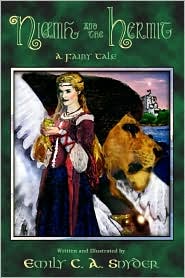
Reader Review: Niahm and the Hermit
Come away, oh mortals; come away from this world of dreary cares and dismal doings. Enter into a rich world of mystery, wonder, and danger, where the pageantry of the court and the stubborn day-to-day living of the common world sit comfortable together, and where the woods hold constant danger and the possibility of breathtaking beauty.
 Niahm and the Hermit is a marvelous piece of high fantasy that flows like a deep, slow river toward a satisfying, if tear-jerking, conclusion. The plot never feels hurried, moving on at a steady pace to allow the reader to understand everything going on--and be aware, there is always a lot going on. The world of the Twelve Kingdoms is well-imagined and filled with its own mythologies, often referencing old tales and goings-on that happened well before the story takes place. The settings move from the pageantry of the court to the goings-on at a common inn in the town below the castle, from the eerie depths of the Dark Wood to the merriment of a Faerie's woodland hall, from the rough life on the road to the simple life of a peasant--flowing seamlessly from one setting to the other, and doing it so well it never feels jarring.
The book boasts several villains: the sophisticated Count, whose fall is detailed in the first few chapters until you are not surprised at the depth of his depravity, an ancient evil that roams the mountains, and a bitter, spiteful old witch with ambitions beyond her powers, in addition to numerous monsters roaming the Dark Wood and three demonic shadows serving the Count. And these villains are written so well that, despite the fact that the entire rest of the cast is, if not heroes, at least innocents, they never seem overmatched.
But the heroes are the real reason the book works so well. Despite the poetic, archaic prose they speak and act in, every one of them comes across as a real person, cheerfully shattering the myth that truly good people are boring to read about. The heroine, in particular--a princess who is so beautiful she blinds almost anyone who sees her without her veil, and is as good as she is beautiful--never comes across as cloying, silly, dull, or without humor. Even more impressively, her devoted, feisty cousin Elowen never reads as bitchy--though her role as uninterested heartbreaker of the court could easily degenerate into that. And the hero, Gethin, the mysterious Hermit, is completely believable as he seeks out his beloved, whom he knows only through a few letters and one conversation in the moonlight.
The book is not for everyone. Just for starters, the prose is rich, generously embellished with verbal equivalents of purple, lapis lazuli, and gold leaf. The language is also archaic, the characters addressing each other as 'Thee' and 'Thou' except in informal circumstances, and the descriptive scenes can take up to half a page to read. Admittedly, that's one of my favorite things about the book: I really like gorgeous description and lush prose.
The story has a tone of high morals without being preachy. Actions have consequences, and if your actions aren't the best, then you might find the consequences unpleasant--which is all it really has to say on the subject, aside from a mild sorrow indicated when certain characters fall. In one instance, the Count uses crude language--which is in keeping with the scene, where he is trying to drive his guard into madness--and there are a few mentions of premarital sex, all of which are mentioned so lightly, or so subtly, that a preteen probably wouldn't pick them up at all. (Three captives in the camp of the Wolf King are said to have been trysting when they were caught, and a sassy old lady telling a story makes a reference to a girl who would "give her all, and have worse for her pains in nine month's time.")
There are dozens of characters, all of whom have Welsh or Gaelic-styled names, and this makes the glossary and pronunciation guide in the back of the book vital. The good thing is, even the appendices are are so well-written that you don't mind going through them to look up different characters or backstories. In fact, I look forward to paging through and reading the legends of the Twelve Kingdoms.
So if you like deep stories where there's always another thing to discover, rich language, and vibrant characters, I would heartily recommend this book.
The book boasts several villains: the sophisticated Count, whose fall is detailed in the first few chapters until you are not surprised at the depth of his depravity, an ancient evil that roams the mountains, and a bitter, spiteful old witch with ambitions beyond her powers, in addition to numerous monsters roaming the Dark Wood and three demonic shadows serving the Count. And these villains are written so well that, despite the fact that the entire rest of the cast is, if not heroes, at least innocents, they never seem overmatched.
But the heroes are the real reason the book works so well. Despite the poetic, archaic prose they speak and act in, every one of them comes across as a real person, cheerfully shattering the myth that truly good people are boring to read about. The heroine, in particular--a princess who is so beautiful she blinds almost anyone who sees her without her veil, and is as good as she is beautiful--never comes across as cloying, silly, dull, or without humor. Even more impressively, her devoted, feisty cousin Elowen never reads as bitchy--though her role as uninterested heartbreaker of the court could easily degenerate into that. And the hero, Gethin, the mysterious Hermit, is completely believable as he seeks out his beloved, whom he knows only through a few letters and one conversation in the moonlight.
The book is not for everyone. Just for starters, the prose is rich, generously embellished with verbal equivalents of purple, lapis lazuli, and gold leaf. The language is also archaic, the characters addressing each other as 'Thee' and 'Thou' except in informal circumstances, and the descriptive scenes can take up to half a page to read. Admittedly, that's one of my favorite things about the book: I really like gorgeous description and lush prose.
The story has a tone of high morals without being preachy. Actions have consequences, and if your actions aren't the best, then you might find the consequences unpleasant--which is all it really has to say on the subject, aside from a mild sorrow indicated when certain characters fall. In one instance, the Count uses crude language--which is in keeping with the scene, where he is trying to drive his guard into madness--and there are a few mentions of premarital sex, all of which are mentioned so lightly, or so subtly, that a preteen probably wouldn't pick them up at all. (Three captives in the camp of the Wolf King are said to have been trysting when they were caught, and a sassy old lady telling a story makes a reference to a girl who would "give her all, and have worse for her pains in nine month's time.")
There are dozens of characters, all of whom have Welsh or Gaelic-styled names, and this makes the glossary and pronunciation guide in the back of the book vital. The good thing is, even the appendices are are so well-written that you don't mind going through them to look up different characters or backstories. In fact, I look forward to paging through and reading the legends of the Twelve Kingdoms.
So if you like deep stories where there's always another thing to discover, rich language, and vibrant characters, I would heartily recommend this book.
Subscribe to:
Posts (Atom)